
Thanksgiving is one of the biggest food-service weekends of the year. Restaurants, caterers, grocery stores, church kitchens, and hotels all load their coolers with turkeys, dairy, sides, desserts, and prep ingredients. If your refrigeration fails with a full walk-in, the loss is not just a repair bill. It is spoiled inventory, missed orders, and possible health-code trouble.
At Operation Comfort Control, LLC, we see the same pattern every autumn: warning signs show up weeks before a system quits, but they get ignored because the kitchen is busy. This guide walks through the five most common signs that you need professional commercial refrigerator repair, shows what they look like on real equipment, and gives you a simple checklist to get ready before the holiday rush.
Why Thanksgiving Puts Commercial Refrigeration Under Pressure
A commercial refrigeration system is built to run for hours every day, but the holiday season pushes it past its normal workload. Doors open more often, warm product goes in all at once, and walk-ins stay packed so air cannot circulate. Even in the South, outdoor temperatures around Georgia and South Carolina can stay warm in early fall, which makes condensing units work harder.
The FDA Food Code requires cold foods to be held at 41°F or below. A system that was barely keeping up in September will often fail outright when demand peaks. That is why scheduling commercial refrigerator repair before Thanksgiving week is one of the smartest moves a food-service owner can make.
Sign 1: Your Temperatures Are Drifting or Will Not Hold
The most important sign is also the easiest to check. Look at your temperature controller and compare it to a separate thermometer placed inside the box. A healthy cooler should sit steadily in the mid-30s °F. If the display swings by several degrees, climbs above 40°F, or takes hours to recover after a delivery, something is wrong.
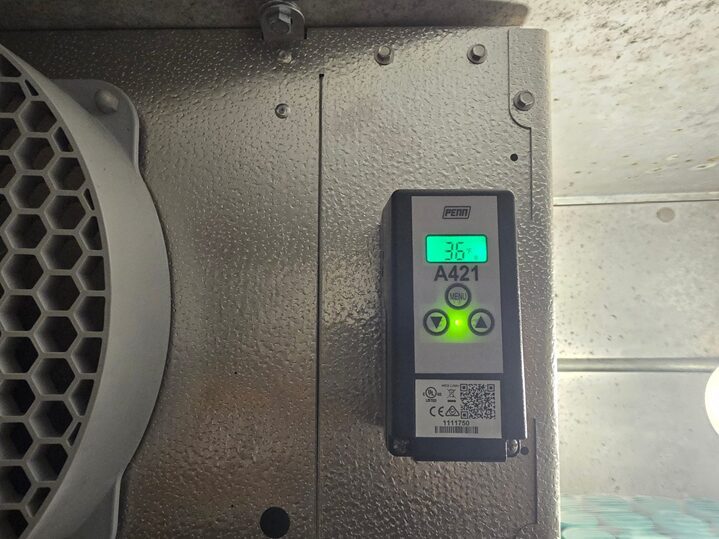
A Penn A421 electronic controller reading 36°F. This is a healthy reading, so check yours against an independent thermometer.
Common causes include a failing temperature sensor, incorrect controller settings, a weak compressor, low refrigerant, or a dirty coil. Because a controller shows only what its probe senses, a bad probe can hide a real problem. A technician can verify actual box temperature, test the sensor, and confirm that defrost and fan cycles are set correctly.
What to do
- Keep a daily temperature log so you can spot trends early.
- Place a calibrated thermometer in the middle of the box, not near the door.
- Do not keep lowering the setpoint. This strains the system and rarely fixes the cause.
- Call for commercial refrigeration repair if the box stays above 41°F for more than a short period.
Sign 2: The Compressor Runs Constantly or Makes Strange Noises
Refrigeration units are meant to cycle on and off. If your compressor runs nonstop, the system cannot reach its setpoint. If you hear loud humming, clicking, buzzing, rattling, or grinding, parts are wearing out. Hard starts, tripped breakers, and a hot compressor housing are also red flags.
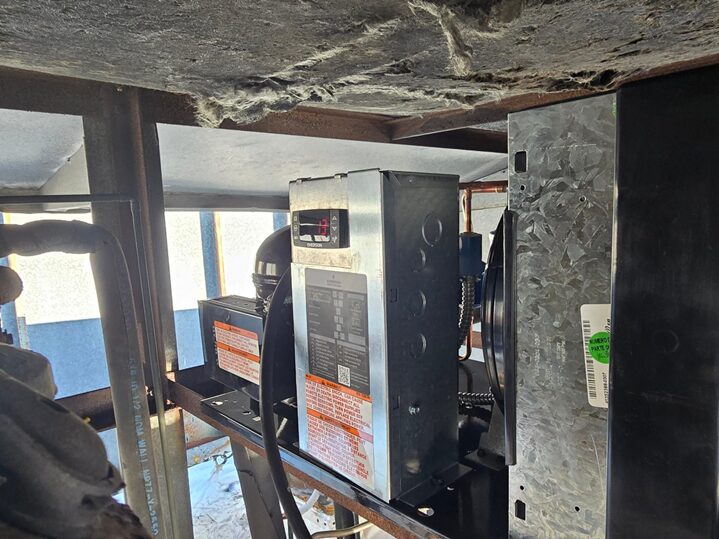
An Emerson condensing unit and its electronic controller. Unusual noise or constant running here points to a developing problem.
The compressor is the heart of the system, and it is the most expensive component to replace. In many cases the compressor is not the original problem. A failed condenser fan motor, a dirty condenser coil, a bad start capacitor, or a refrigerant leak can force it to overwork until it burns out. Catching these smaller faults early often saves thousands of dollars.
If your unit is old, loud, and repeatedly failing, you may be better off replacing it. Our team can walk you through the numbers and, if needed, handle a walk-in cooler installation with equipment sized correctly for your menu and volume.
Sign 3: Frost, Ice Buildup, or a Dirty Evaporator Coil
A little frost during a normal defrost cycle is expected. A thick layer of ice on the evaporator coil, fan housing, ceiling, or product is not. Heavy ice blocks airflow, which makes the box warm even while the compressor runs. Ice usually points to a failed defrost heater, defrost timer or sensor, a faulty evaporator fan, a door that does not seal, or high humidity entering the box.
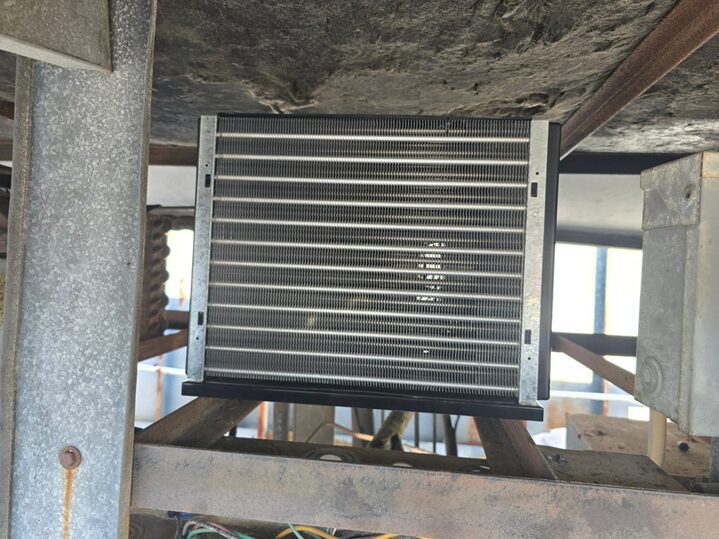
A clean evaporator coil with open fin spacing. Blocked, frosted, or dirty fins reduce cooling and raise energy use.
Dirty coils cause similar problems. On the condenser side, grease, dust, and lint insulate the coil so it cannot release heat. On the evaporator side, buildup restricts airflow. Both lower efficiency, raise your electric bill, and shorten equipment life. Routine cleaning is simple, yet it is the most commonly skipped maintenance task in commercial kitchens.
A regular maintenance plan prevents most of this. See how our walk-in cooler preventive maintenance program keeps coils clean, defrost systems working, and temperatures stable all year.
Sign 4: Leaks, Bubbles in the Sight Glass, or Hissing Sounds
Refrigerant is sealed in a closed loop, so it should never run low unless there is a leak. Signs of a leak include hissing, oily residue on fittings or copper lines, ice on the suction line, a cooler that slowly loses performance, and bubbles or a cloudy look in the liquid line sight glass. Water pooling under the unit can also signal a clogged drain line, cracked drain pan, or failed defrost drain heater.
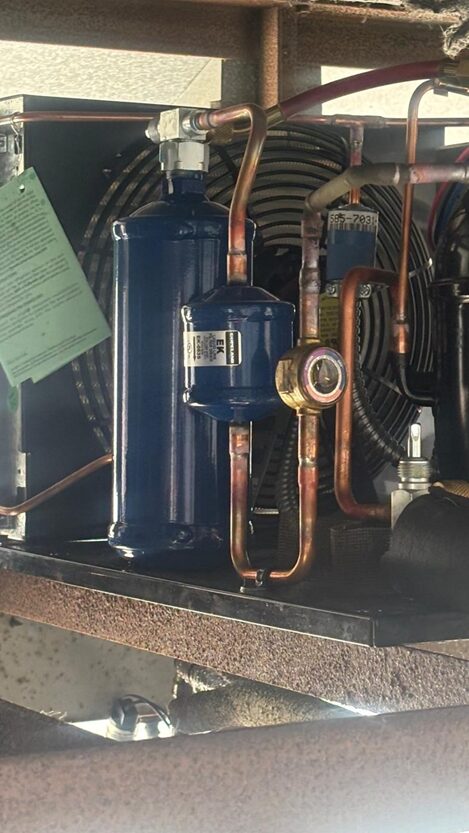
A liquid line filter drier and sight glass. Bubbles or moisture indicators here can reveal low refrigerant or system contamination.
The filter drier removes moisture and debris from the refrigerant, while the sight glass helps technicians judge refrigerant charge and moisture levels. When either shows trouble, topping off refrigerant is not a real fix. A qualified technician must find and repair the leak, replace the drier if needed, and recharge to the correct level. Federal rules also require certified handling of refrigerants, so this is not a DIY job.
The same issues affect freezers, which have even less room for error. If your frozen product is soft or you see frost-free food getting freezer burn, our commercial freezer repair service can diagnose the cause quickly.
Sign 5: Rising Energy Bills, Bad Door Seals, and Odors
Not every warning is dramatic. A slow increase in your electric bill often means your refrigeration is working harder to do the same job. Worn door gaskets let warm, humid air in. Doors that do not close fully, broken hinges, or damaged strip curtains do the same. Over time, that moisture creates ice, mold, and odors, and it forces the compressor to run longer.
Check these quick items right now:
- Close a dollar bill in the door. If it slides out easily, the gasket is not sealing.
- Look for cracked, torn, or flattened gaskets and replace them promptly.
- Watch for sweating on walls, floors, or product, which signals humidity infiltration.
- Notice musty or sour smells, which can mean mold, drain problems, or spoiled food.
- Compare the last three months of utility bills for unexplained increases.
Small fixes at this stage are inexpensive. Waiting turns them into major commercial refrigerator repair jobs, and in a busy Thanksgiving week, parts and technicians are harder to get.
Pre-Thanksgiving Commercial Refrigeration Checklist
Use this list in the next two weeks to reduce your risk of a holiday failure:
- Verify temperatures: reach-ins and walk-ins at 41°F or below, freezers at 0°F or below.
- Clean condenser coils: remove dust, grease, and debris to improve airflow.
- Inspect evaporator coils and fans: look for ice, noise, or weak airflow.
- Test door seals and hinges: replace worn gaskets and make sure doors self-close.
- Clear drain lines: confirm water flows freely and nothing is frozen or clogged.
- Check electrical connections: look for burned wires, loose terminals, or tripped breakers.
- Do not overload: leave space around product so cold air can circulate.
- Plan a backup: know where you will move product and who you will call in an emergency.
If you find any of the issues above, book service right away. Holiday schedules fill quickly, and the earlier you call, the more options you have.
Repair or Replace? How to Decide
Not every failing cooler is worth fixing. As a general guide, repair makes sense when the unit is under about 10 to 12 years old, the problem is a single component, and the repair cost is well below half the price of new equipment. Replacement is smarter when the unit has repeated breakdowns, a failing compressor, obsolete parts, a major refrigerant leak, or very high energy use.
Our technicians give you an honest assessment of both options. If a new unit is the better investment, we can help you compare options, and you can browse our reach-in coolers for sale to see what may fit your kitchen. We would rather earn your trust with straight advice than sell you something you do not need.
The Real Cost of Waiting
A single failed walk-in can mean thousands of dollars in lost food, plus lost sales, overtime, and stress. Health inspectors can also shut down a kitchen that cannot hold safe temperatures. Compare that with the cost of an inspection or minor repair done in advance. Preventive commercial refrigerator repair is almost always the less expensive path, and it protects your reputation during the busiest weekend of the season.
Who We Serve
Operation Comfort Control, LLC provides commercial refrigeration, cooler, freezer, and kitchen equipment service to restaurants, convenience stores, schools, caterers, and other food-service businesses across southeast Georgia and the South Carolina Lowcountry. Our coverage includes Statesboro, Pooler, Hinesville, Brunswick, Metter, Jesup, and Vidalia in Georgia, plus Bluffton, Hilton Head, and Beaufort in South Carolina. See the full area we serve for details.
Frequently Asked Questions
How do I know if my commercial refrigerator needs repair?
Warning signs include temperatures above 41°F, constant running, ice buildup, strange noises, leaks, bad odors, and rising energy bills. If you notice any of these, schedule service quickly.
How much does commercial refrigerator repair cost?
Cost depends on the problem. Cleaning, sensor replacement, or gasket repair is usually modest, while compressor or refrigerant leak repairs cost more. A technician should diagnose the issue and give you a clear quote before starting work.
How often should commercial refrigeration be serviced?
Most manufacturers and technicians recommend professional maintenance at least twice a year, with more frequent visits for heavy-use kitchens. Coils should be cleaned regularly, and temperatures should be logged daily.
What temperature should a commercial refrigerator be?
Refrigerators should hold food at 41°F or below, with many operators targeting 35°F to 38°F for a safety margin. Freezers should stay at 0°F or below.
Can I fix my commercial cooler myself?
You can clean gaskets, clear space around vents, and tidy product. Electrical, refrigerant, and sealed-system work should always be done by a licensed professional for safety and legal reasons.
Final Thoughts
Thanksgiving should be about serving customers, not scrambling to save spoiled food. Watch for the five signs covered here: unstable temperatures, a noisy or nonstop compressor, ice and dirty coils, leaks or bubbling in the sight glass, and rising energy bills or worn seals. If you spot even one, act now. Early commercial refrigerator repair is faster, cheaper, and far less stressful than an emergency in the middle of the holiday rush.
Ready to get ahead of the season? Call Operation Comfort Control, LLC and let our experienced team inspect, repair, and protect your refrigeration so you can focus on feeding your guests.
