
If your commercial coffee machine is leaking water, dripping from the base, or pooling on the countertop every morning, you are not alone. This is one of the most common service calls we get from restaurants, quick-service kitchens, and convenience stores across South Georgia and the South Carolina Lowcountry. In almost every case where a coffee machine leaking issue shows up, the root cause is a failed water inlet valve — a small but critical part that controls how water flows into the brewer.
In this post, we’re walking you through a real service call from our team at Operation Comfort Control, LLC, where we diagnosed and replaced a failed water inlet valve on a Curtis commercial coffee and tea brewer. We’ll cover what causes this problem, how to spot the warning signs, and exactly how our technicians repaired it — step by step.
For any commercial kitchen, a coffee machine leaking water is more than an inconvenience — it’s a safety hazard, a potential slip-and-fall risk, and a threat to nearby electrical outlets and equipment. Restaurants, convenience stores, and quick-service locations rely on their brewers running non-stop through the morning rush, so downtime isn’t really an option. That’s exactly why understanding the water inlet valve, how it works, and why it fails matters for any business owner or manager overseeing kitchen equipment.
Why Is My Coffee Machine Leaking Water?
A coffee machine leaking water is almost never a random event. Commercial brewers run water through solenoid valves dozens or even hundreds of times a day. Over time, the internal seals, diaphragms, and plastic housings inside the water inlet valve wear down from mineral buildup, constant pressure cycling, and heat. Once the valve starts to fail, water either leaks continuously or drips every time the machine calls for a fill cycle.
The most common causes we see for a leaking water inlet valve include:
- Mineral and scale buildup inside the valve body, common in areas with hard water
- A worn or cracked internal diaphragm that no longer seals properly
- Electrical solenoid failure, which causes the valve to stay partially open
- Age and wear — most inlet valves last 2 to 5 years under heavy commercial use
- Loose or corroded fittings where the valve connects to the water line
How Does a Water Inlet Valve Actually Work?
A water inlet valve is an electrically controlled solenoid valve that opens and closes to let water flow into the brewer’s internal tank at the exact moment it’s needed. When the brewer’s control board sends a signal, the solenoid coil energizes, lifts a small internal plunger, and lets water pass through a rubber or silicone diaphragm into the fill line. Once the tank reaches the correct level, the signal stops, the plunger drops back down, and the valve seals shut.
This sounds simple, but it happens dozens of times a day on a busy commercial machine. Each cycle puts wear on the diaphragm and seal. Add in mineral deposits from tap water, and it’s easy to see why a water inlet valve is one of the most frequently replace parts on any commercial coffee or tea brewer. When that seal finally gives out, the result is exactly what we saw on this job — a coffee machine leaking steadily, even when it isn’t actively brewing.
How Much Does It Cost to Replace a Water Inlet Valve?
One of the first questions business owners ask when they call about a coffee machine leaking is how much the repair will cost. The good news is that a water inlet valve replacement is typically one of the more affordable fixes for commercial brewing equipment, especially compared to replacing the entire unit. Pricing depends on a few factors:
- The brand and model of the brewer (Curtis, Bunn, Fetco, and others each use different valve types)
- Whether one valve or a dual-valve assembly needs to be replaced
- Accessibility of the valve inside the equipment cabinet
- Whether additional fittings, hoses, or brackets also need attention
In most cases, a straightforward water inlet valve replacement can be completed in under an hour by an experienced technician, minimizing the time your equipment is out of service. Compare that to the cost and lead time of a brand-new commercial brewer, and a valve replacement is almost always the smarter first move.
Signs Your Water Inlet Valve Is Failing
Before your coffee machine leaking problem turns into a bigger issue — like water damage to your countertop, electrical components, or flooring — watch for these early warning signs:
- Water pooling underneath or behind the brewer, even when it’s not actively brewing
- A slow, steady drip near the base of the machine
- Inconsistent brew volume or the machine not filling completely
- A humming or buzzing sound coming from the back panel
- Visible corrosion or white mineral crust around the valve fittings
If you notice any of these symptoms, it’s time to call in a professional before the leak causes damage to surrounding equipment or the floor. Catching the problem early with routine equipment checks is always cheaper and faster than an emergency repair.
Real Service Call: Diagnosing the Leak
On this job, the client reported that their Curtis single-station coffee and tea brewer was leaking water steadily from behind the unit. Here’s how our technician approached the coffee machine leaking issue on-site.
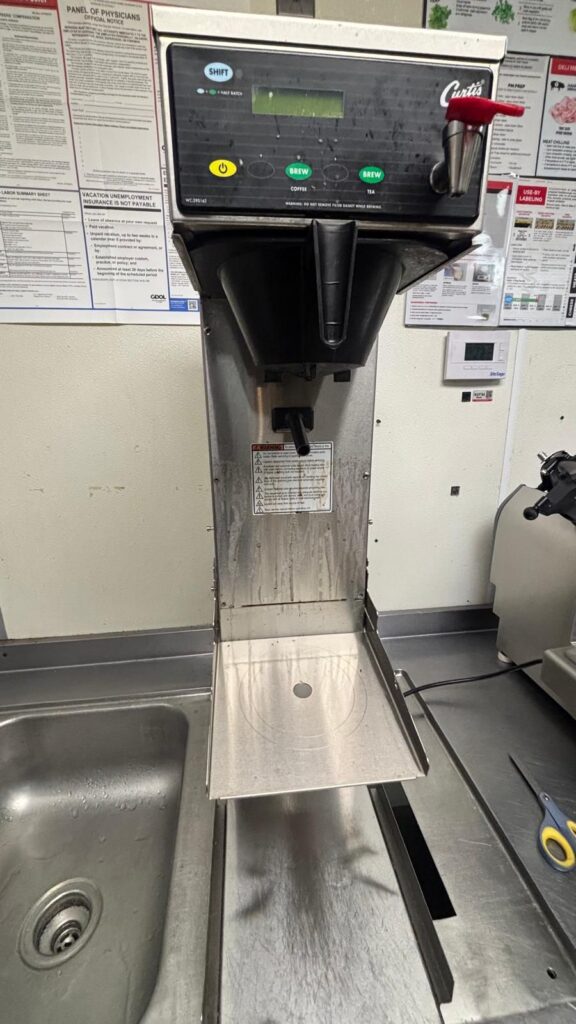
The Curtis coffee/tea brewer at the client’s location before service began.
Step 1: Locate the Water Inlet Valve
The first step in any coffee machine leaking repair is finding the source of the leak. Our technician removed the rear access panel of the brewer and located two dual-solenoid water inlet valves mounted to the interior wall of the cabinet — one for hot water fill and one for the auxiliary line. Both valves showed visible signs of wear at the seal points, with moisture actively present around the housing.
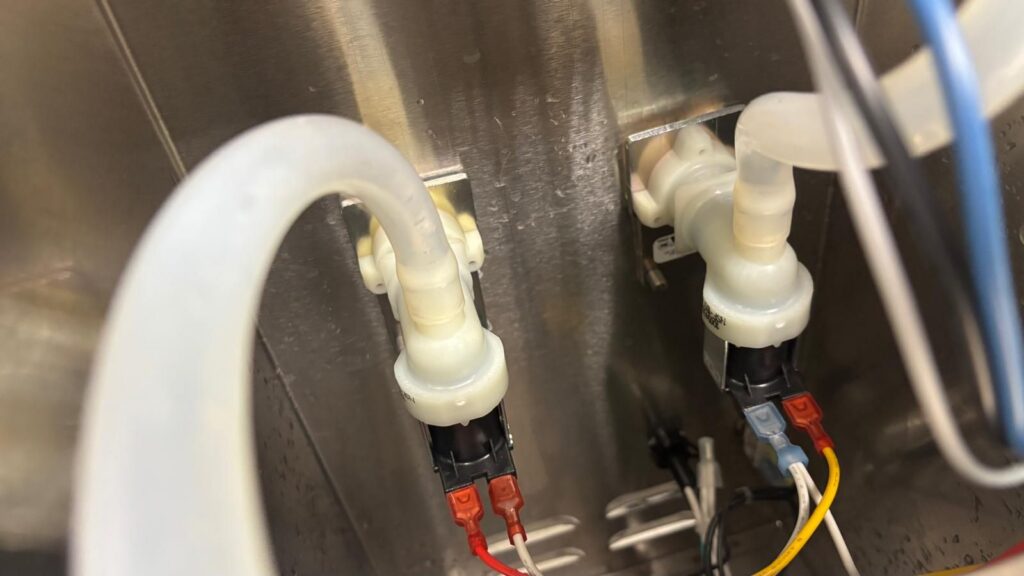
Dual solenoid water inlet valves mounted inside the brewer cabinet, with wiring connectors visible.
Step 2: Shut Off the Water Supply and Disconnect the Lines
Before removing anything, the water supply feeding the machine was shut off at the shutoff valve behind the unit. The braided supply line and compression fittings were then disconnected from the brass elbow fittings, and the electrical spade connectors were carefully unplugged from each solenoid.
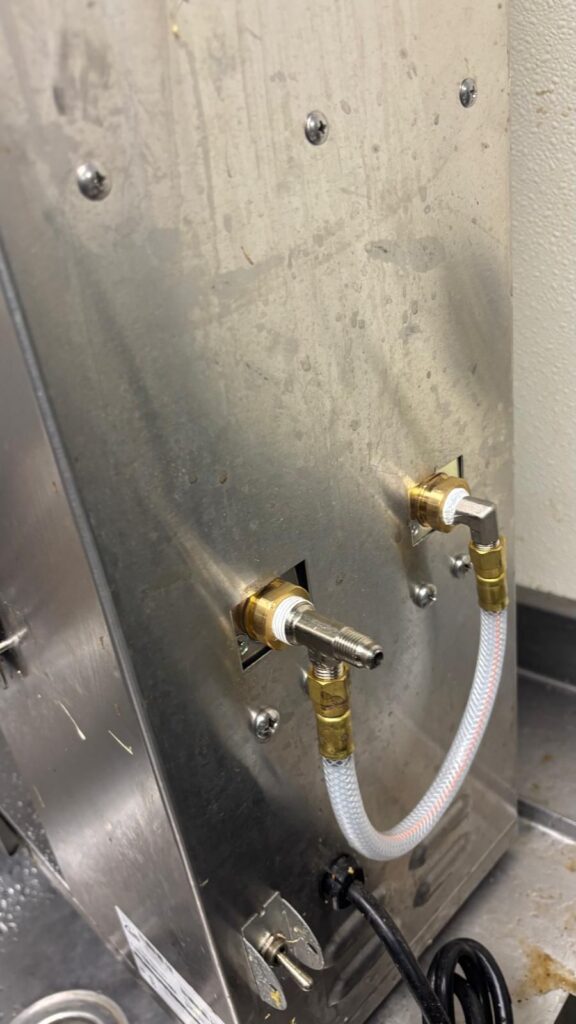
Water supply line and brass compression fittings disconnected ahead of the valve removal.
Step 3: Remove the Failed Valve Assembly
With the lines clear, the mounting bracket was unscrewed and the full water inlet valve assembly was removed from the cabinet. On inspection, the internal diaphragm had degraded and was no longer sealing correctly — confirming this was the exact source of the coffee machine leaking complaint.
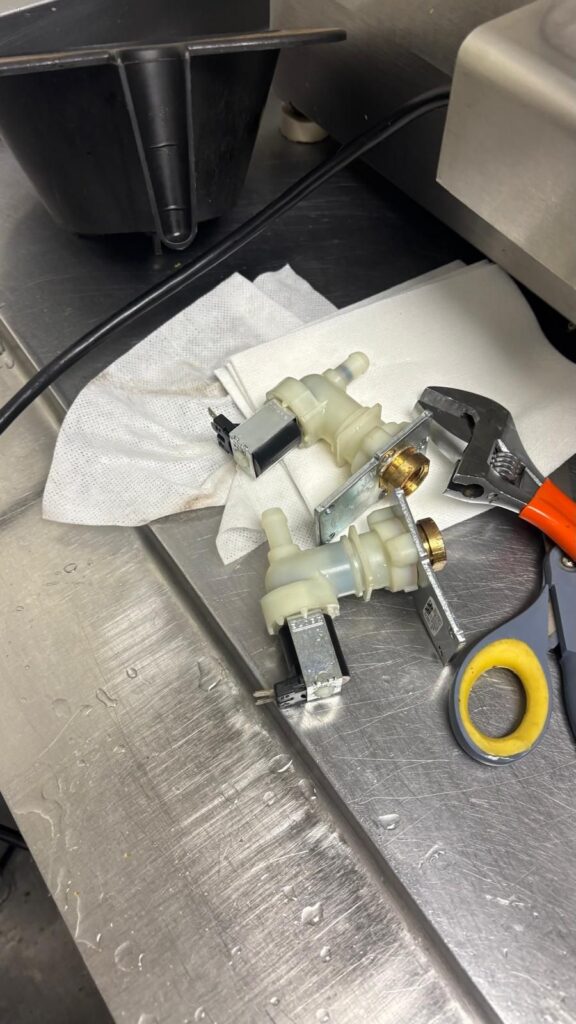
The old, worn water inlet valve assembly removed for replacement, shown next to service tools.
Step 4: Install the New Water Inlet Valve
A new OEM-matched water inlet valve was installed in the same mounting position, reconnected to the brass fittings, and the electrical spade connectors were reattached to the correct terminals. Every connection was checked for a tight, leak-free seal before moving forward.
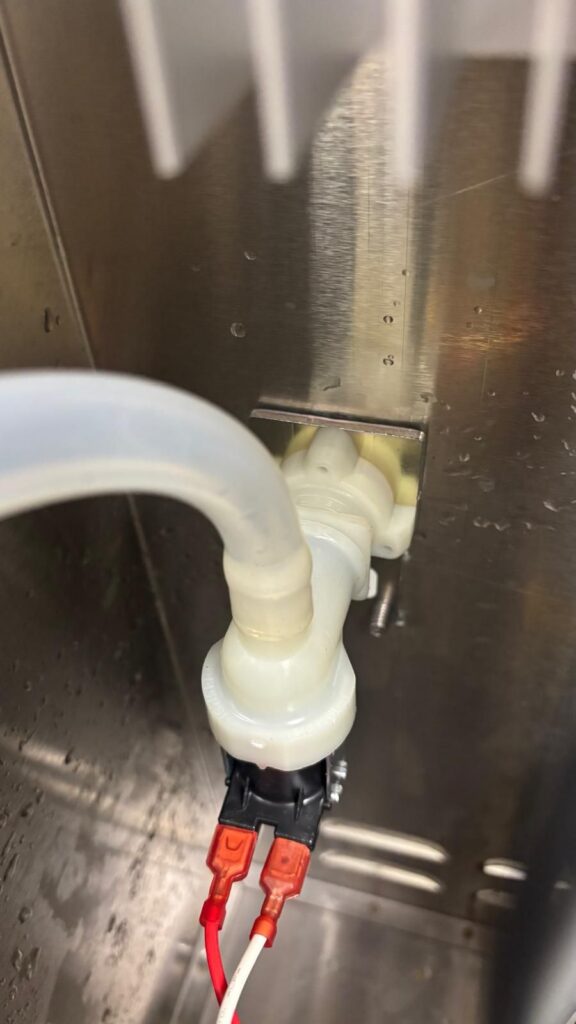
New water inlet valve installed, reconnected, and secured back in its mounting bracket.
Step 5: Test for Leaks and Confirm Proper Operation
With the new valve in place, the water supply was turned back on and the line was checked closely for drips at every fitting. The brewer was then run through a full brew cycle to confirm the fill, flow, and shut-off all worked correctly with no signs of a coffee machine leaking issue remaining.
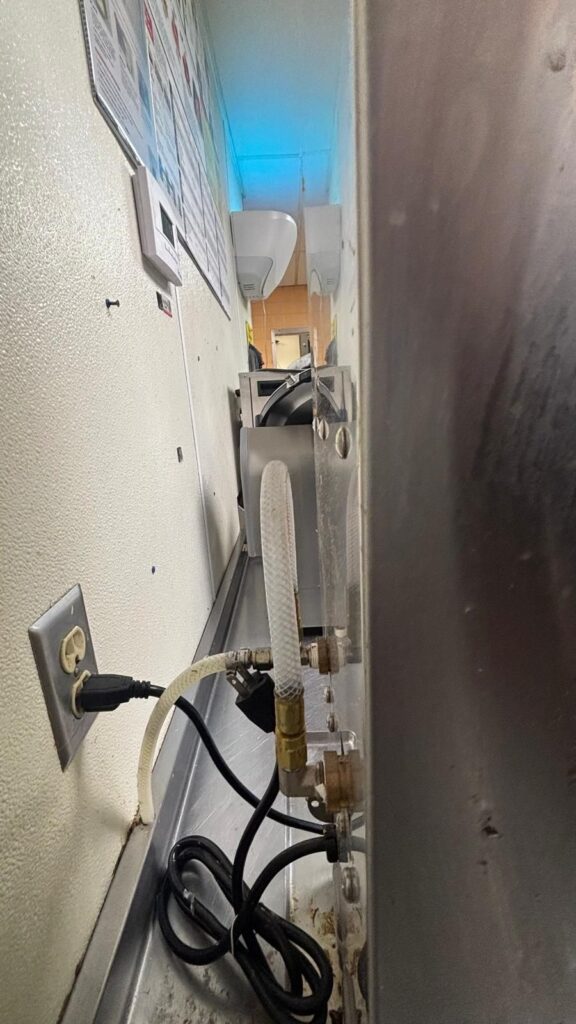
Final leak check on the supply line and fittings after the new valve was installed.
Why DIY Repairs on a Water Inlet Valve Can Be Risky
It might be tempting to try to fix a coffee machine leaking problem yourself, but commercial brewers involve pressurized water lines, electrical solenoids, and food-safety considerations that aren’t worth guessing on. A poorly sealed water inlet valve can lead to water damage, equipment downtime, or even electrical hazards near the unit. Our licensed technicians are trained specifically on commercial kitchen equipment, so the job gets done safely and correctly the first time.
Ready to stop the leak for good? Contact our team today and we’ll get a technician out to diagnose and repair your equipment fast.
Preventing Future Water Inlet Valve Failures
The best way to avoid a coffee machine leaking emergency is routine preventive maintenance. Regular descaling, fitting inspections, and valve checks can catch a weakening water inlet valve months before it fails completely. This keeps your kitchen running, protects your equipment investment, and avoids unexpected downtime during your busiest hours.
Beyond coffee and tea brewers, we also service the equipment that keeps a commercial kitchen moving, including shake and frozen beverage machines, walk-in coolers, ice machines, and more. A full-service approach means fewer surprise breakdowns across your equipment lineup.
Want to get ahead of the next breakdown? Explore our full lineup of commercial equipment repair and maintenance services and schedule a preventive maintenance visit before your next leak turns into a shutdown.
Areas We Serve
Operation Comfort Control, LLC proudly services restaurants, convenience stores, and commercial kitchens throughout Georgia and South Carolina. Whether you’re dealing with a coffee machine leaking issue, a walk-in cooler down, or need routine equipment maintenance, our technicians are ready to help. See the full list of areas we serve to find your location.
Why Choose Operation Comfort Control, LLC
When your coffee machine is leaking and your morning rush is minutes away, you need a team that shows up prepared, diagnoses the issue quickly, and carries the right parts on the truck. That’s what sets Operation Comfort Control, LLC apart from a general handyman or an out-of-town repair company:
- Technicians experienced specifically with commercial kitchen and beverage equipment, not just general appliances
- Fast response times across our service area, so a coffee machine leaking doesn’t turn into a full-day shutdown
- Transparent diagnostics — we show you exactly what failed, like the worn water inlet valve in this job, before any work begins
- Preventive maintenance programs designed to catch small issues before they become expensive repairs
- A track record of service across restaurants, convenience stores, and commercial kitchens throughout Georgia and South Carolina
Frequently Asked Questions
What causes a coffee machine leaking at the base?
Most base-level leaks trace back to a failed water inlet valve, a cracked diaphragm, or a loose supply-line fitting. A technician can usually confirm the cause within minutes by inspecting the rear panel.
How long does a water inlet valve last?
On a commercial brewer running multiple cycles a day, a water inlet valve typically lasts 2 to 5 years, depending on water hardness and usage volume. Areas with hard water tend to see valve failures sooner due to mineral buildup.
Can I replace a water inlet valve myself?
While it’s mechanically possible, working around pressurized water lines and live electrical connections on commercial equipment carries real risk if done incorrectly. We recommend having a licensed technician handle the repair to protect your equipment and avoid downtime.
Do you offer maintenance plans to prevent leaks?
Yes. Our preventive maintenance programs are designed to catch a failing water inlet valve and other wear-and-tear issues before they turn into an unexpected coffee machine leaking emergency.
How do I know if it’s the water inlet valve and not something else?
If the leak is coming from behind the machine near the water supply connection, and it happens regardless of whether the machine is actively brewing, it’s very likely the water inlet valve. Leaks that only occur mid-brew cycle can point to other components, which is why a proper inspection matters before ordering parts.
Is a leaking coffee machine an emergency?
It can be. Standing water near electrical outlets or equipment is a genuine safety hazard, and a continuous leak can damage flooring, cabinetry, and nearby appliances. If you notice your coffee machine leaking, it’s best to shut off the water supply to the unit and call a technician the same day.
Final Thoughts
A coffee machine leaking water doesn’t have to mean buying a whole new unit. In most cases, it’s a simple, affordable fix once you find the source — usually a worn-out water inlet valve. Our team at Operation Comfort Control, LLC has the tools, parts, and experience to get your equipment back up and running fast, with minimal disruption to your kitchen.
Learn more about who we are and how we serve commercial kitchens on our About Us, or browse our blog for more service tips and real repair breakdowns like this one.
Don’t let a leaking water inlet valve slow down your kitchen. Reach out to the Operation Comfort Control, LLC team today, or check out our Google Business Profile to see reviews from other commercial kitchens we’ve helped.
