
Every year, the weeks between Thanksgiving and New Year’s turn commercial kitchens into pressure cookers. Banquets, catering orders, family gatherings and office parties all land at once, and your ovens carry most of the load. When one fails during this window, you lose more than a few hours. You lose reservations, staff morale and the loyalty of guests who chose you for their celebration. That is why scheduling restaurant oven repair before the holiday rush is one of the smartest moves an owner or kitchen manager can make.
In this guide, our team explains how to spot early warning signs, decide between repair and replacement, build a pre-holiday oven checklist, and book service at the right time so your kitchen stays productive when demand peaks.
When Should You Schedule Restaurant Oven Repair?
The best time to schedule restaurant oven repair is four to six weeks before your busiest season. Book an inspection if your oven heats unevenly, takes longer to reach temperature, shows error codes, smells of gas, or has doors that do not seal. Fixing small issues early costs far less than an emergency breakdown on a sold-out holiday weekend.
What You Will Learn in This Article
- Why ovens fail more often during the holidays
- Eight warning signs that call for professional service
- How to decide between repairing and replacing a commercial oven
- A practical pre-holiday oven checklist
- What to expect from a qualified commercial oven technician
- Answers to the most common restaurant oven repair questions
Why Your Oven Works Hardest During the Holidays
Holiday menus are heavy on roasted meats, baked sides, breads, desserts and large-batch catering trays. Many restaurants run ovens ten to fourteen hours a day for weeks in a row, and they open and close those doors hundreds of times per shift. Heat cycling, grease buildup, worn gaskets and aging thermostats all get worse under that stress.
A small calibration drift that was easy to ignore in October becomes a real problem in December. If your oven runs twenty-five degrees too hot, food burns and waste climbs. If it runs too cool, you risk undercooked food, longer ticket times and food safety concerns. Reliable restaurant oven repair keeps temperatures accurate, which protects both quality and consistency.
8 Warning Signs You Need Restaurant Oven Repair
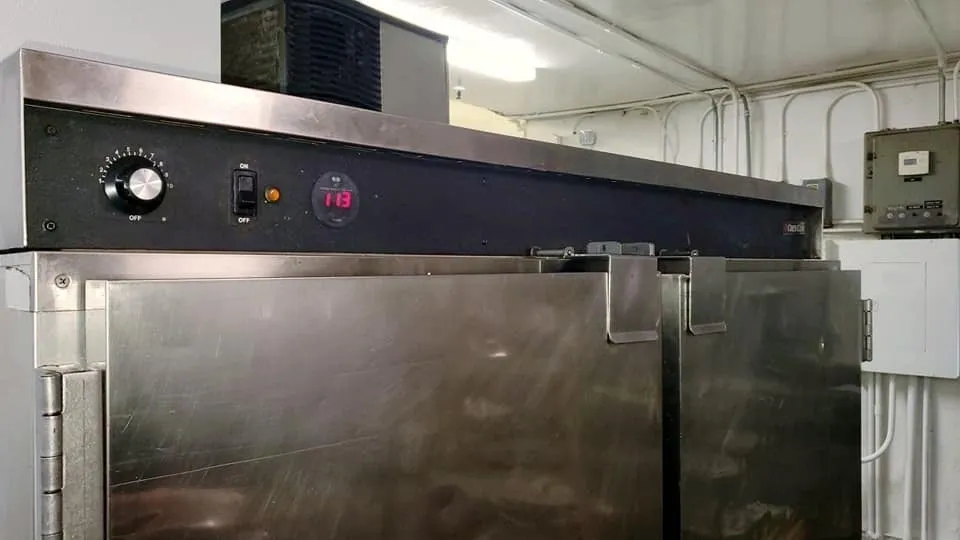
Do not wait for a full shutdown. These symptoms usually show up first:
- Uneven cooking or hot spots. Trays on one side brown faster than the other, which often points to a failing fan motor, bad heating element or damaged baffle.
- Slow preheating. If your oven needs much longer than before to reach temperature, an element, igniter, thermocouple or control board may be wearing out.
- Temperature that does not match the dial. A thermostat or sensor that is off by more than a few degrees needs calibration or replacement.
- Door problems. Damaged gaskets, loose hinges or warped doors let heat escape, raise energy bills and make the oven work harder.
- Clicking, no ignition or a weak flame. Gas ovens with igniter or pilot issues can fail without warning.
- Strange smells or smoke. Burning odors may signal grease buildup, wiring issues or a gas leak. Treat any gas smell as an emergency, shut off the supply and evacuate.
- Error codes or flickering controls. Digital control boards often warn you before they fail completely.
- Rising utility bills. An inefficient oven burns more gas or electricity to do the same job.
Seeing any of these signs? Do not wait for a holiday breakdown. Contact our team to schedule professional restaurant oven repair.
► Find Us on Google →
Common Commercial Oven Problems and Their Causes
Different oven types fail in different ways. Knowing the usual suspects helps you describe the problem clearly when you call for service.
Convection Ovens
Convection ovens rely on fans to circulate hot air. Failed fan motors, worn bearings and dirty vents cause uneven baking and longer cook times. Grease and flour dust often clog airflow paths.
Deck and Pizza Ovens
These ovens depend on stable, even heat across stone or steel decks. Burner problems, cracked decks and failing thermostats lead to cold spots and inconsistent crusts.
Combi and Steam Ovens
Combi ovens combine steam and dry heat, so scale buildup, water-quality problems and clogged spray nozzles are common. Steam generators need regular descaling to stay efficient.
Gas vs. Electric Models
Gas ovens typically need igniter, pilot, thermocouple and gas valve attention. Electric ovens more often need new heating elements, contactors, relays or control boards. A technician who works on both can diagnose the issue faster and avoid unnecessary part swaps.
Repair or Replace? How to Decide
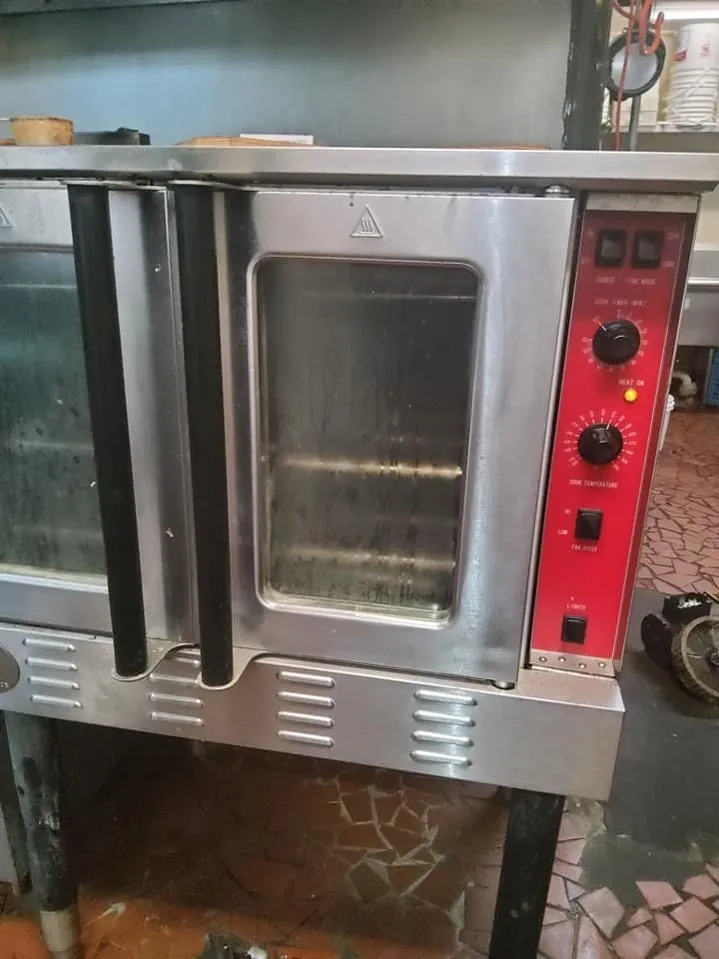
Not every unreliable oven needs to be thrown out. A good rule is to compare the repair cost to the replacement cost and consider the age and condition of the unit.
- Repair makes sense when the oven is under ten years old, the problem is a single part, and the rest of the unit is in good shape.
- Replacement makes sense when repairs are becoming frequent, parts are hard to find, or the cost of fixing the unit approaches half the price of a new one.
- Think about efficiency. Newer ovens can use less energy and hold temperature more accurately, which adds up over a busy season.
If replacement is the better path, you can browse options on the oven for sale near me page, and explore the wider selection of commercial kitchen equipment to see what fits your menu and space. A technician can also help you size and choose a unit so you do not overspend.
Your Pre-Holiday Oven Checklist
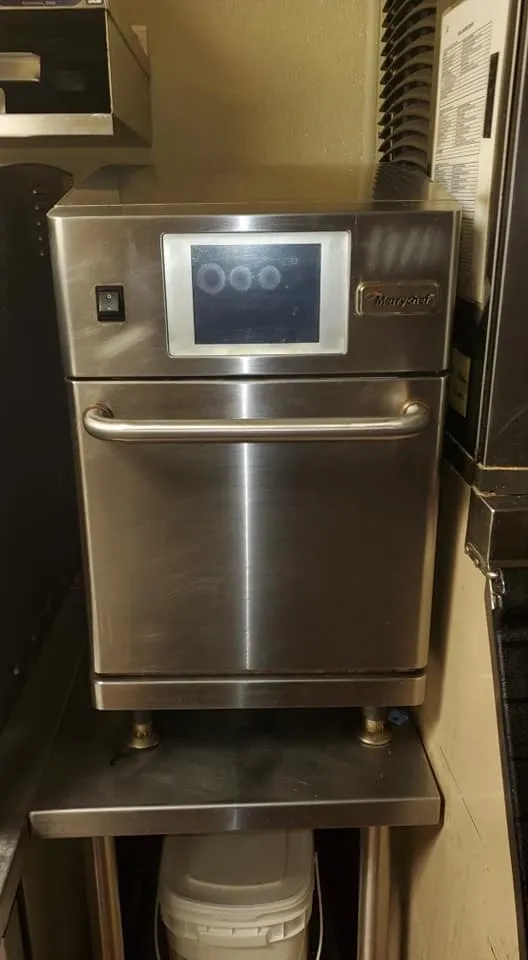
Use this checklist at least a month before your peak season. It helps you catch problems while there is still time to repair them.
- Run the oven empty and confirm it reaches the set temperature in a normal time.
- Place an oven thermometer inside and compare it to the display.
- Inspect door gaskets, hinges and latches for cracks, gaps or looseness.
- Deep clean interior surfaces, racks, fans and vents to remove grease.
- Check burners or elements for even flame or even glow.
- Listen for unusual fan noises or rattling.
- Verify that timers, lights and control panels all work.
- Confirm the area around the oven is clear and ventilation hoods are working.
- Write down any error codes, symptoms or recent changes to share with your technician.
If any item fails, schedule restaurant oven repair right away rather than hoping it will hold up through December.
Preventive Maintenance: The Smartest Holiday Insurance
Repairs fix problems after they appear. Preventive maintenance stops many of them from happening. During a maintenance visit, a technician cleans, tests, calibrates and replaces worn parts before they fail. We offer commercial cooking equipment preventive maintenance designed to keep ovens, fryers, griddles and other cooking equipment running safely and efficiently.
The benefits are easy to measure:
- Fewer emergency calls during your busiest weeks
- Longer equipment lifespan
- Lower energy use and more consistent cooking
- Better safety for your staff and your building
- Fewer surprise expenses, since small repairs are cheaper than major failures
Many restaurants find that a modest maintenance plan costs far less than a single lost holiday weekend.
Want to get ahead of the rush? Call or message our team to book restaurant oven repair or a preventive maintenance visit before your schedule fills up.
► Contact Us on Google →
Do Not Forget the Rest of Your Kitchen
Ovens get the attention, but holiday volume strains every system in the kitchen. Walk-in coolers hold extra prep and catering inventory, and a failure there can cost thousands in spoiled food. Scheduling walk-in cooler preventive maintenance at the same time as your oven service is an efficient way to protect your whole operation with a single visit plan.
If you are unsure which services you need, the full list on the services page shows everything the team can handle, from cooking equipment to refrigeration.
What to Expect When You Hire a Commercial Oven Technician
A professional visit should be clear, organized and focused on getting you back to cooking. Here is what a quality service call usually includes:
- Diagnosis. The technician listens to your description, inspects the oven, tests components and identifies the root cause.
- Clear explanation. You should get a plain-language summary of what is wrong and what it will take to fix it.
- Repair. Worn or failed parts are replaced and the oven is tested under real operating conditions.
- Calibration and safety checks. Temperatures, ignition and controls are verified before the unit goes back into service.
- Recommendations. If other equipment looks at risk, you are told so you can plan ahead.
For a broader look at the kinds of equipment problems the team handles, see the commercial equipment repair page. Choosing a technician who services multiple equipment types means one call can often solve several issues.
How to Prepare Your Kitchen for a Service Visit
- Let the oven cool completely before the technician arrives.
- Clear space around the unit so the technician can work safely.
- Have the make, model and serial number ready, usually found on the data plate.
- Share any error codes, photos or notes about when the problem started.
- Choose a slower time of day when possible so your team can work around the visit.
Why Choose a Local Commercial Kitchen Service Partner
We focus on commercial kitchen and refrigeration equipment for restaurants, cafes, convenience stores and food-service businesses. Instead of juggling separate vendors for cooking equipment, cooling equipment and maintenance, you can work with one team that understands how these systems work together and how much a delay costs during peak season.
When you choose a local service partner, you get practical advice, clear communication and a team that understands the pressure of a full dining room. That is especially valuable when you need restaurant oven repair on a tight timeline.
Areas We Serve
The team supports food-service businesses across coastal and southeast Georgia and nearby South Carolina. To confirm that your location is covered, visit the areas we serve page and find your city or nearest service area.
Frequently Asked Questions About Restaurant Oven Repair
How much does restaurant oven repair cost?
Cost depends on the oven type, the failed part and the labor required. Simple fixes like a gasket, igniter or thermostat are usually much cheaper than major repairs such as a control board or fan motor replacement. A technician can give you an accurate estimate after diagnosing the unit.
How long does a commercial oven repair take?
Many repairs can be completed in a single visit if the technician has the part available. Specialty parts may need to be ordered, which is why booking before the holiday rush matters.
How often should a commercial oven be serviced?
Most restaurants benefit from professional service at least twice a year, with more frequent visits for ovens that run all day. Daily cleaning by your staff between those visits also helps.
Can I keep using an oven that heats unevenly?
It is not recommended. Uneven heat leads to inconsistent food, wasted ingredients and possible food safety issues. Small problems also tend to grow into larger, more expensive ones.
What should I do if I smell gas near my oven?
Turn off the gas supply if it is safe to do so, leave the area, avoid using any switches or flames, and contact your gas provider or emergency services. Do not use the oven again until a qualified technician has inspected it.
Is it better to repair or replace an old oven?
If the unit is fairly new and the issue is a single part, repair is usually the better value. If breakdowns are frequent or repair costs approach half of a new unit, replacement is often smarter.
Final Thoughts: Protect Your Holiday Revenue
The holiday season is your chance to earn new customers and strengthen relationships with regulars. A working oven is the foundation of that effort. By watching for warning signs, following a pre-holiday checklist, investing in preventive maintenance and scheduling restaurant oven repair early, you give your kitchen the best chance of running smoothly from the first reservation to the last order of the year.
Do not leave your busiest weeks to chance. A small investment now can save you from lost sales, wasted food and stressful emergency calls later.
Ready to get your kitchen holiday-ready? Reach out to Operation Comfort Control, LLC today to schedule restaurant oven repair, and use our contact page to tell us what your kitchen needs.
► Call Us via Google Business Profile →