
If your ice machine not making ice the way it should, your restaurant, bar, or convenience store can grind to a halt during your busiest hours. A broken ice machine doesn’t just cost you sales — it can send customers walking straight to your competitor. The good news is that most ice production problems come down to a handful of predictable causes, and many of them can be identified before you ever call a technician.
At Operation Comfort Control, LLC, we repair and maintain commercial ice machines for restaurants, bars, hotels, and convenience stores across Georgia and South Carolina. In this guide, we’ll walk through the seven most common reasons an ice machine not making ice stops working, what you can check yourself, and when it’s time to bring in a professional.
Need help right now? Contact Operation Comfort Control, LLC for fast, reliable commercial ice machine repair near you.
Why Ice Machine Downtime Is So Costly for Your Business
For restaurants, bars, hotels, convenience stores, and healthcare facilities, ice isn’t a nice-to-have — it’s part of daily operations. A single afternoon without ice can mean warm drinks, unhappy guests, canceled catering orders, and staff scrambling to buy bagged ice at retail prices just to get through a shift. Multiply that across a busy weekend, and a small mechanical issue can turn into hundreds or even thousands of dollars in lost revenue and emergency costs.
That’s why it pays to catch the early warning signs — slower cycles, smaller cubes, unusual noises, or higher energy bills — before they turn into a full system breakdown during your busiest rush.
Quick Answer: Why Is My Ice Machine Not Making Ice?
In most cases, an ice machine not making ice is caused by one of these issues: a restricted water supply, a dirty condenser, a refrigerant leak, a faulty water inlet valve, scale buildup inside the machine, a malfunctioning thermostat or control board, or simply a lack of regular preventive maintenance. Below, we break each of these down in detail so you can troubleshoot the problem before it shuts down your business.
1. Restricted or Low Water Supply
Every commercial ice machine needs a steady, adequate water supply to form ice. If the water line is kinked, the shut-off valve is only partially open, or the water pressure in your building has dropped, the machine simply won’t have enough water to complete its freeze cycle.
How to check it
- Inspect the water line for kinks, clogs, or a closed valve.
- Check your building’s water pressure — most ice machines need at least 20 PSI to function properly.
- Look at the inlet water filter for sediment or mineral buildup.
If the water supply checks out fine but the machine is still struggling, the problem is likely mechanical or electrical rather than a plumbing issue. It’s also worth checking whether other equipment on the same water line — such as a dishwasher or beverage dispenser — is competing for pressure during peak hours, since shared plumbing can starve an ice machine of water exactly when you need it most.
2. Dirty or Blocked Condenser Coils
Condenser coils release heat as part of the refrigeration cycle. When they’re coated in dust, grease, or kitchen grime, the machine can’t reject heat efficiently, and ice production slows down or stops entirely. This is one of the most common — and most preventable — reasons behind an ice machine not making ice call we receive.
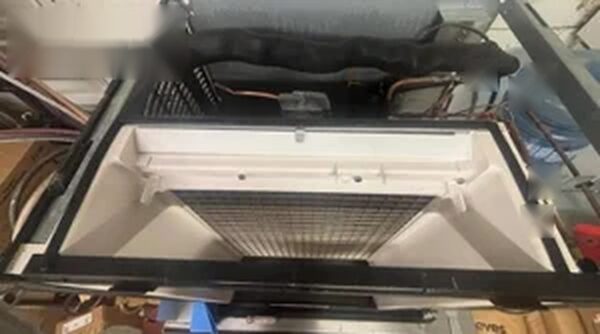
A cleaned evaporator and coil assembly during a real service visit.
How to check it
- Look at the coils; if they’re covered in a visible layer of dust or grease, they need cleaning.
- Feel the airflow around the unit — weak or hot airflow is a sign of a blocked condenser.
- Check that nothing is blocking the ventilation space around the machine.
Condenser cleaning is a routine part of commercial refrigeration upkeep. If your equipment hasn’t been serviced recently, our commercial refrigeration repair team can inspect and clean it properly.
As a general rule, condenser coils in a busy commercial kitchen should be cleaned every one to three months. Kitchens with heavy fryer or grill use tend to accumulate grease in the air faster, which settles on coils and shortens the interval between cleanings. Air-cooled units near a kitchen line typically need more frequent attention than water-cooled models.
3. Refrigerant Leak
Refrigerant is what allows the machine to pull heat out of the water and freeze it into ice. A slow leak can go unnoticed for weeks while ice production gradually declines, until the machine stops making ice altogether. Refrigerant leaks are a safety and efficiency issue and should never be handled without proper certification.
Warning signs of a refrigerant leak
- Ice cubes are smaller or thinner than normal.
- Longer freeze cycles than usual.
- Frost or ice forming in unusual places on the unit.
- A hissing sound near refrigerant lines.
Refrigerant work requires licensed technicians and EPA-compliant handling. If you suspect a leak, schedule commercial equipment repair right away rather than waiting for a full breakdown.
Ignoring a refrigerant leak doesn’t just stop ice production — it can also cause the compressor to run under abnormal pressure, which shortens its lifespan and eventually leads to a compressor failure that costs far more to repair than the original leak would have.
4. Faulty Water Inlet Valve
The water inlet valve controls how much water enters the machine for each freeze cycle. When this valve sticks, corrodes, or fails electrically, the machine may receive too little water — or none at all — and the ice-making cycle will fail.
How to check it
- Listen for the valve opening during the fill cycle; silence usually means it isn’t engaging.
- Check for mineral deposits or corrosion around the valve body.
- Test for continuity if you’re comfortable using a multimeter — otherwise, leave this to a technician.
A failed inlet valve is a relatively inexpensive part, but diagnosing it correctly takes experience, since the symptoms look similar to a water pressure problem. A technician will typically test the valve under power, check the solenoid coil for continuity, and inspect the screen filter inside the valve body before recommending a replacement.
5. Scale Buildup and Mineral Deposits
Hard water leaves behind calcium and lime scale inside the machine’s water lines, spray nozzles, and evaporator plate. Over time, this buildup restricts water flow and insulates the freezing surface, which is a leading cause of an ice machine not making ice at full capacity, even when every component is technically working.
Signs of scale buildup
- Cloudy or misshapen ice cubes.
- Slower ice production than usual.
- Visible white or chalky residue inside the machine.
Regular descaling is one of the simplest ways to prevent this. Our ice machine preventive maintenance program includes scheduled descaling, sanitizing, and component checks to keep production steady year-round.
Businesses in areas with hard water tend to see scale buildup much faster, sometimes within just a few weeks of the last cleaning. Installing a water filtration or softening system ahead of the ice machine can significantly extend the time between descaling services and improve overall ice quality and clarity.
6. Thermostat or Control Board Malfunction
Modern commercial ice machines rely on a control board and thermostat to manage freeze cycles, harvest cycles, and shutoff timing. When a sensor misreads temperature or the control board develops a fault, the machine can get stuck mid-cycle or stop triggering ice production altogether.
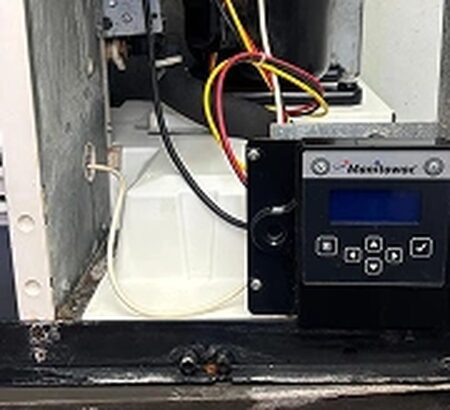
A control board and thermostat module inspected during a repair visit.
How to check it
- Look for error codes on the display panel, if your unit has one.
- Check if the machine is stuck in a single cycle without progressing.
- Note any unusual clicking, humming, or silence from the control panel.
Electrical diagnostics on control boards should always be handled by a trained technician, since misdiagnosis can lead to unnecessary part replacement and added downtime. In many cases, what looks like a control board failure is actually a faulty sensor or a loose wiring connection, both of which are far less expensive to fix than a full board replacement.
7. Lack of Regular Preventive Maintenance
Most of the causes above share one root problem: skipped maintenance. Ice machines that don’t receive regular cleaning, descaling, and inspection are far more likely to develop the exact issues that lead to an ice machine not making ice emergency call. Preventive maintenance catches small issues — a dirty coil, a slow leak, a worn valve — before they turn into a full shutdown.
We cover this in more detail in our article on why regular ice machine maintenance saves you money, which explains how a simple maintenance schedule can reduce repair costs and extend equipment lifespan.
Businesses that follow a consistent maintenance schedule typically see fewer emergency repairs, lower utility costs from a more efficient system, and a longer overall equipment lifespan. A well-maintained ice machine also produces more consistent, higher-quality ice, which matters for beverage presentation and food safety alike. A simple quarterly checklist — inspecting water lines, cleaning air filters, checking for unusual noise, and monitoring ice output — can catch most problems long before they become costly.
Don’t wait for a breakdown. Book a preventive maintenance visit with Operation Comfort Control, LLC today and keep your ice machine running through every rush.
A Quick DIY Troubleshooting Checklist
Before you pick up the phone, run through this quick checklist. It won’t fix every issue, but it can help you describe the problem accurately and may even resolve simple cases on your own.
- Confirm the machine has power and the breaker hasn’t tripped.
- Check that the water supply valve is fully open.
- Look for visible ice buildup, frost, or leaks around the unit.
- Inspect the condenser coils and clean off any visible dust or grease.
- Listen for unusual sounds — clicking, humming, or silence during the fill cycle.
- Check the bin thermostat to make sure it isn’t stuck in the “bin full” position.
- Note any error codes displayed on the control panel.
If you’ve gone through this list and the machine still won’t produce ice, or if you’re uncomfortable inspecting electrical or refrigeration components yourself, it’s time to call a professional rather than risk further damage.
What to Do When Your Ice Machine Still Won’t Make Ice
If you’ve checked the water supply, cleaned the condenser, and the machine is still not producing ice, it’s time to bring in a professional. Continuing to run a struggling ice machine can lead to compressor damage, which is far more expensive to repair than catching the problem early.
Operation Comfort Control, LLC provides commercial refrigeration and kitchen equipment repair across Georgia and South Carolina, including our full service areas. We also handle related equipment such as walk-in cooler preventive maintenance, so your entire kitchen stays cold and compliant, not just your ice machine.
How Operation Comfort Control, LLC Can Help
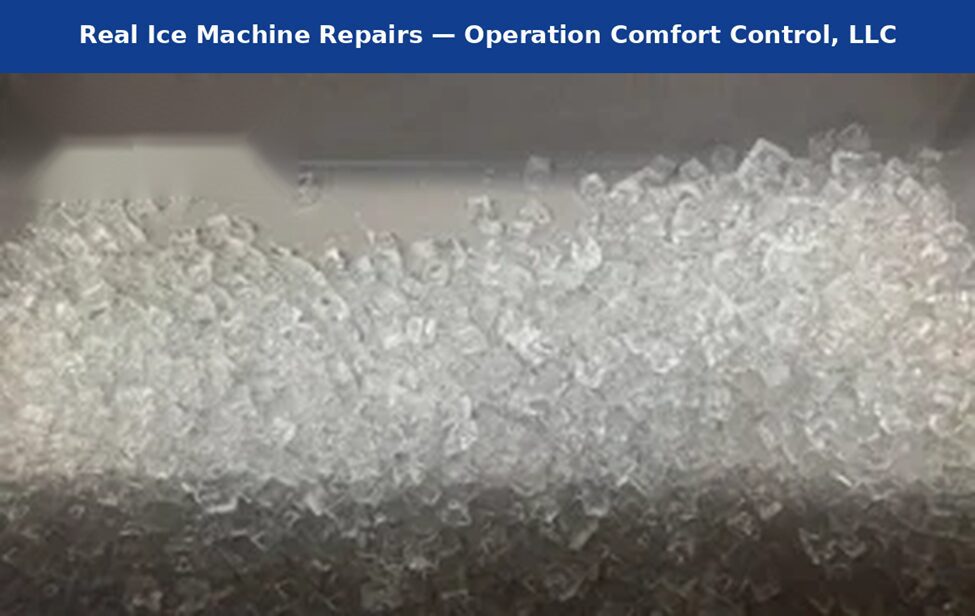
Real ice machine repairs completed by our technicians — from clear, full-capacity ice to clean evaporators, water lines, and control boards.
Operation Comfort Control, LLC specializes in diagnosing and repairing commercial ice machines quickly, so you’re never left explaining to customers why there’s no ice. Our technicians carry common replacement parts, follow manufacturer specifications, and document every visit so you have a clear maintenance history for your equipment.
When you work with our team, you get:
- Same-week diagnostic and repair appointments.
- Transparent pricing with no hidden fees.
- Technicians experienced across major commercial ice machine brands.
- Preventive maintenance plans built around your business’s usage.
For a closer look at how we’ve helped businesses in the region, see our case study on ice machine preventive maintenance services in Savannah, GA.
Frequently Asked Questions
Why is my commercial ice machine not making ice at all?
The most common reasons an ice machine not making ice completely stops are a closed or restricted water valve, a tripped breaker, a failed water inlet valve, or a refrigerant leak. Start by confirming the machine has power and water, then check the condenser coils before calling for repair.
How often should a commercial ice machine be cleaned?
Most manufacturers recommend cleaning and descaling every three to six months, though machines in hard-water areas or high-volume kitchens may need service more frequently.
Can I fix a refrigerant leak myself?
No. Refrigerant handling requires EPA certification and specialized equipment. Attempting a DIY refrigerant repair can damage the compressor and is not legal for untrained individuals to perform.
How much does ice machine repair typically cost?
Costs vary depending on the part involved — a water inlet valve replacement is far less expensive than a compressor or refrigerant repair. A diagnostic visit will give you an accurate, itemized estimate before any work begins.
Is preventive maintenance really worth it for a small business?
Yes. A single emergency repair or a day of lost ice sales often costs more than an entire year of scheduled preventive maintenance, making it one of the most cost-effective investments for any food or beverage business.
How long should a commercial ice machine last?
With regular maintenance, most commercial ice machines last between seven and twelve years, depending on the brand, usage volume, and water quality in your area. Machines that skip routine cleaning and descaling often show serious problems well before that range.
Final Thoughts
An ice machine not making ice is stressful, but it’s rarely a mystery once you know what to look for. Water supply issues, dirty condensers, refrigerant leaks, faulty valves, scale buildup, control board problems, and missed maintenance account for the vast majority of ice production failures. Catching these issues early — through simple checks or a scheduled maintenance plan — keeps your equipment reliable and your business running smoothly.
Ready for reliable, expert service? Operation Comfort Control, LLC is trusted by restaurants and businesses across Georgia and South Carolina for fast ice machine repair and preventive maintenance. Reach out to our team today to schedule your service and keep the ice flowing all season long.
