
A walk-in cooler that is not cooling properly is one of the most stressful problems a restaurant owner, grocery store manager, or convenience store operator can face. When your walk-in cooler starts running warm, every minute counts, product spoils fast, health inspectors take notice, and your profits walk out the door with the wasted inventory. The good news is that a struggling walk-in cooler almost always gives you warning signs before it fails completely. If you know what to look for, you can call a professional before a small issue turns into a full system breakdown.
At Operation Comfort Control, LLC, we have repaired hundreds of walk-in coolers across Georgia and South Carolina, from small cafes to large-scale commercial kitchens. In this guide, we will walk you through the 7 most common signs that your walk-in cooler needs repair, why they happen, and what you can do about them before they cost you thousands of dollars in lost product.
Why a Walk-In Cooler Stops Cooling Properly
A walk-in cooler is a complex system made up of a compressor, condenser, evaporator coil, fan motors, thermostat, door gaskets, and refrigerant lines all working together. When even one of these components starts to fail, the entire system struggles to maintain temperature. Catching the early warning signs of a failing walk-in cooler can save your business from a costly shutdown, spoiled inventory, and unhappy customers.
1. The Temperature Inside Feels Warmer Than Usual
This is the most obvious sign that something is wrong. If you walk into your cooler and it feels noticeably warmer than the set temperature, or if your thermometer reads above 40°F, your walk-in cooler is struggling to keep up. This can be caused by a failing compressor, a refrigerant leak, a dirty condenser coil, or a thermostat that is no longer reading temperatures correctly. Do not wait to see if it “fixes itself” — a warming walk-in cooler is a race against the clock for your food safety and inventory.
2. The Compressor Runs Constantly (or Not at All)
A healthy walk-in cooler compressor cycles on and off throughout the day. If yours is running nonstop and never shutting off, it is working overtime to compensate for lost efficiency, usually due to low refrigerant, a dirty condenser, or a failing motor. On the other hand, if the compressor will not turn on at all, you may be dealing with an electrical fault, a tripped breaker, or a burned-out compressor. Either extreme is a clear signal that your walk-in cooler needs professional repair right away.
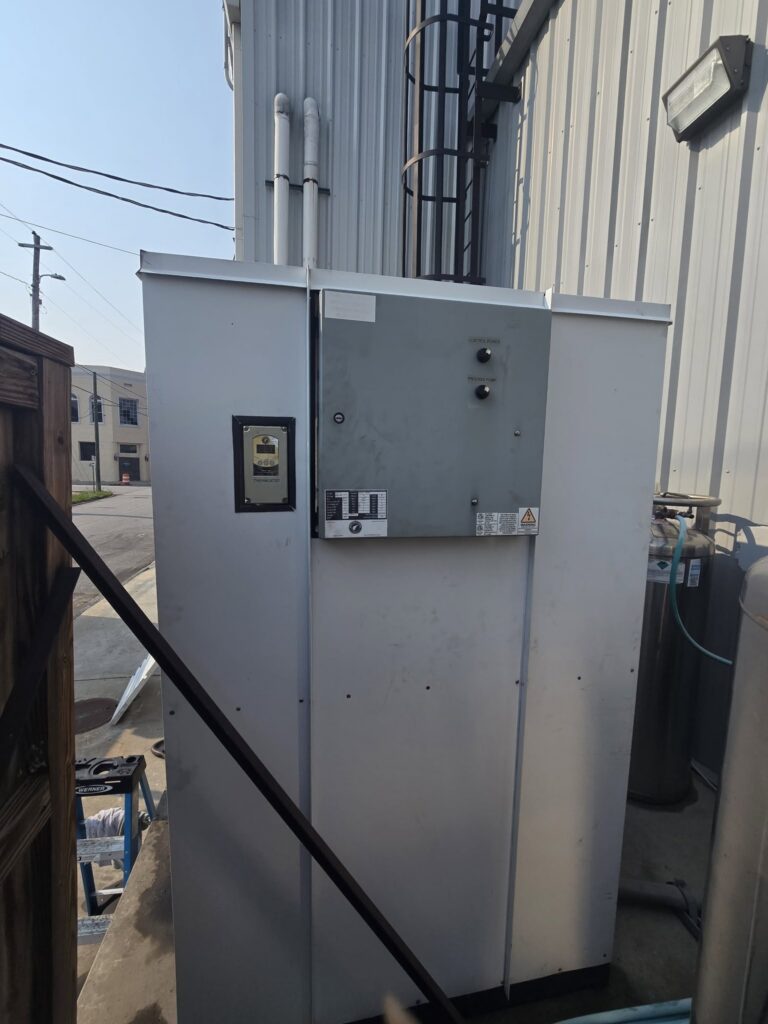
An outdoor walk-in cooler condensing unit — a common trouble spot when dirt and debris block airflow.
3. Ice Buildup on the Evaporator Coil
If you notice frost or thick ice forming on the evaporator coil or fan blades inside your walk-in cooler, this usually means airflow is restricted or refrigerant levels are off. Ice buildup can be caused by a faulty defrost timer, a blocked air filter, a failing fan motor, or a slow refrigerant leak. Left unaddressed, the ice will keep building until it blocks airflow completely, causing your walk-in cooler to warm up even though the compressor is still running.
4. Water Leaking or Pooling on the Floor
Puddles of water inside or around your walk-in cooler are never a good sign. This is often caused by a clogged condensate drain line, a cracked drain pan, or ice buildup that has started to melt. Standing water is also a slip hazard and a food safety violation waiting to happen. A licensed technician can quickly diagnose whether the issue is a simple drain clog or a sign of a bigger mechanical problem with your walk-in cooler.
5. Unusual Noises Coming From the Compressor or Condenser
Every walk-in cooler makes some noise, but grinding, buzzing, rattling, or loud clicking sounds are red flags. These noises often point to a failing compressor, a loose fan blade, worn-out bearings, or an electrical issue inside the control panel. Ignoring strange noises is one of the most common mistakes business owners make, small problems like a loose part can quickly turn into a total compressor failure if not repaired quickly.
6. Damaged Door Gaskets or Poor Door Seal
Your walk-in cooler door gasket keeps cold air in and warm air out. If the gasket is cracked, torn, or no longer sealing tightly, warm air constantly leaks in, forcing the compressor to run harder than it should. You can test this by closing the door on a piece of paper, if you can pull the paper out easily, your seal needs replacing. A damaged gasket is an inexpensive fix that can prevent much bigger walk-in cooler repair bills down the road.
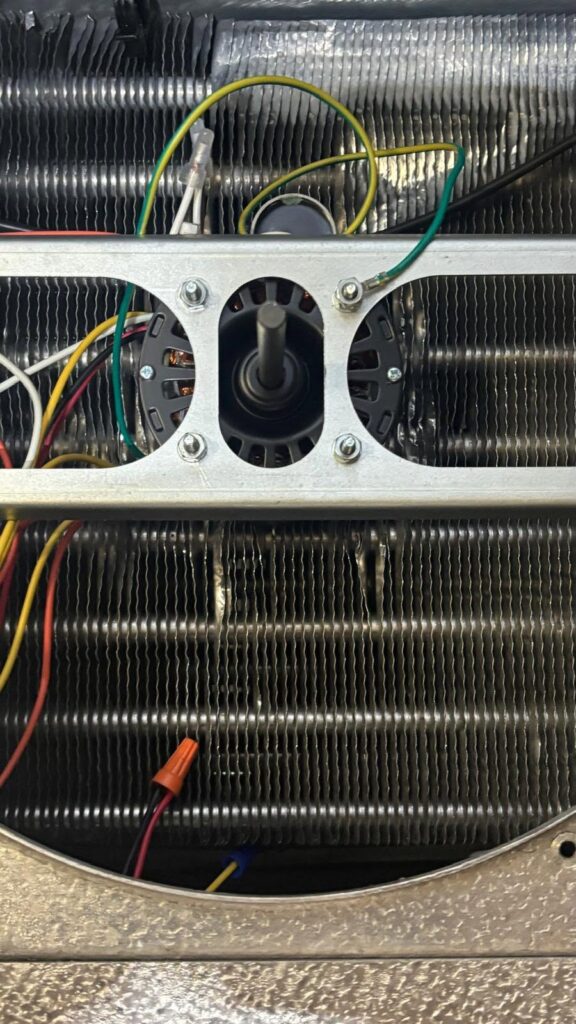
A close-up look at an evaporator coil and fan assembly — frost or ice buildup here signals a walk-in cooler airflow or refrigerant problem.
7. Rising Energy Bills or Frequent Breaker Trips
If your electric bill has crept up without a clear reason, your walk-in cooler compressor may be working overtime to keep up with a hidden problem, such as a refrigerant leak, dirty coils, or a failing motor. Frequent circuit breaker trips are another warning sign, often pointing to an electrical short, an overworked compressor, or aging wiring. Both symptoms mean your walk-in cooler is under strain and needs a professional inspection before a total breakdown happens.
Noticing one or more of these signs? Contact Operation Comfort Control, LLC today for a fast walk-in cooler inspection.
The Hidden Cost of Ignoring a Failing Walk-In Cooler
Many business owners try to push through a struggling walk-in cooler for as long as possible, hoping it will hold on until the next slow season. Unfortunately, this approach almost always costs more in the long run. A walk-in cooler running inefficiently uses significantly more electricity than a properly maintained one, so your utility bill quietly climbs every month the problem goes unaddressed. On top of that, inconsistent temperatures put your food inventory at risk, a single afternoon above safe holding temperatures can force you to throw away hundreds or even thousands of dollars in meat, dairy, and produce.
There is also the risk of failing a health inspection. Local health departments take walk-in cooler temperatures seriously, and a unit that cannot hold 35°F to 38°F consistently can result in fines, a bad inspection score, or in serious cases, a temporary shutdown. When you weigh the cost of a same-day walk-in cooler repair against the cost of spoiled inventory, lost sales, and reputational damage, calling a technician at the first warning sign is almost always the more affordable choice.
What to Do When You Notice These Warning Signs
The moment you notice your walk-in cooler struggling, the smartest move is to call a licensed commercial refrigeration technician instead of waiting it out. Small problems like a dirty condenser coil or a worn door gasket are quick, affordable fixes. But if ignored, they put stress on the compressor and can lead to a full system replacement, along with the cost of spoiled product and potential health code violations.
Operation Comfort Control, LLC specializes in diagnosing and repairing walk-in cooler issues quickly, so your kitchen or store stays open and your inventory stays safe. Our technicians also handle commercial refrigeration repair and commercial freezer repair, so whatever cooling equipment your business relies on, we have you covered.
Prevent Future Walk-In Cooler Breakdowns
The best way to avoid an emergency walk-in cooler repair is regular preventive maintenance. A trained technician can catch small issues, like a slightly low refrigerant charge or a coil that needs cleaning, long before they turn into an expensive breakdown. Routine maintenance also extends the life of your equipment and keeps your energy bills lower year-round.
- Cleaning condenser and evaporator coils to keep airflow strong
- Checking refrigerant levels and looking for early signs of leaks
- Inspecting door gaskets, hinges, and seals for wear and tear
- Testing fan motors, defrost timers, and thermostats
- Clearing condensate drain lines before clogs cause leaks
We recommend scheduling a walk-in cooler preventive maintenance visit at least twice a year to keep your system running efficiently. If your current unit is outdated or beyond repair, our team also offers professional walk-in cooler installation for businesses that need a reliable, energy-efficient replacement.
Looking to Upgrade or Replace Your Equipment?
If your walk-in cooler is old, constantly breaking down, or too small for your growing business, it might be time to consider an upgrade. Browse our selection of refrigeration equipment for sale near you, or reach out to our team for a recommendation tailored to your kitchen or storage needs.
Proudly Serving Georgia and South Carolina
Operation Comfort Control, LLC proudly provides walk-in cooler repair, installation, and maintenance services across our service areas throughout Georgia and South Carolina. Whether you run a restaurant, convenience store, grocery store, or catering business, our team responds quickly to keep your walk-in cooler running at the right temperature, every day of the year.
Ready to schedule a repair or maintenance visit? Get in touch with our team here.
Frequently Asked Questions About Walk-In Cooler Repair
How do I know if my walk-in cooler needs repair or replacement?
If your walk-in cooler is under 10 years old and the repair cost is less than half the price of a new unit, repair is usually the smarter choice. Older units with frequent breakdowns, obsolete parts, or major compressor failure may be better off replaced.
How much does walk-in cooler repair typically cost?
Costs vary depending on the issue, a gasket replacement or drain cleaning is far less expensive than a compressor replacement or refrigerant leak repair. A technician can give you an accurate quote after inspecting your specific walk-in cooler.
How often should a walk-in cooler be serviced?
Most commercial kitchens and stores should have their walk-in cooler professionally inspected and serviced at least twice a year to catch small issues early and keep the unit running efficiently.
What temperature should a walk-in cooler stay at?
A properly working walk-in cooler should maintain a temperature between 35°F and 38°F to keep food safe and fresh. Anything consistently above 40°F is a sign that repair is needed.
Can I repair my walk-in cooler myself?
Minor tasks like cleaning up spills, wiping down door gaskets, or clearing debris away from the outdoor condensing unit are safe for staff to handle. However, anything involving refrigerant, electrical wiring, the compressor, or internal components should always be left to a licensed commercial refrigeration technician. Working on sealed refrigerant systems without the right certification is against the law and can make the problem worse.
Why does my walk-in cooler work fine in the morning but struggle later in the day?
This is a common pattern that usually points to the system being undersized for the heat load, a dirty condenser coil that struggles once ambient temperatures rise, or a refrigerant charge that is just barely low enough to keep up during cooler morning hours. A technician can run load calculations and pressure tests to pinpoint exactly why your walk-in cooler loses ground as the day goes on.
Final Thoughts
A walk-in cooler that is not cooling properly will not fix itself, and waiting too long can turn a small repair into a total system replacement. Watch for warm temperatures, unusual noises, ice buildup, water leaks, worn door seals, and rising energy bills, these are your equipment’s way of asking for help.
If you are seeing any of these warning signs, do not wait for a full breakdown. Operation Comfort Control, LLC is here to help with fast, reliable walk-in cooler repair across Georgia and South Carolina.
Don’t let a small issue become a big problem. Call Operation Comfort Control, LLC today to schedule your walk-in cooler repair.
