
If your walk-in cooler is running warmer than usual, cycling strangely, or making noises it never used to make, don’t wait for a full breakdown. A failing walk-in cooler can spoil inventory, shut down service, and cost a restaurant or grocery business thousands of dollars in a single afternoon. The good news is that most cooling failures give off warning signs long before the unit actually quits. Knowing what to look for — and calling for walk-in cooler repair at the first sign of trouble — is the difference between a quick fix and an emergency shutdown.
In this guide, we’ll walk through the 7 most common warning signs that your walk-in cooler needs professional attention, and why business owners across Savannah trust Operation Comfort Control, LLC for fast, reliable walk-in cooler repair and preventive maintenance.
For restaurants, grocery stores, convenience stores, and food service operations, a walk-in cooler isn’t just another appliance — it’s the backbone of daily operations. Every case of produce, every tray of proteins, and every beverage on the menu depends on that box holding a safe, consistent temperature around the clock. A few degrees of drift might not seem like much at first glance, but health inspectors, insurance policies, and food safety regulations all treat temperature control as non-negotiable. That’s why business owners across Savannah don’t wait until the unit stops entirely — they call for walk-in cooler repair the moment something feels off.
The challenge is that walk-in coolers rarely fail all at once. Instead, they send small signals — a slightly warmer box, a strange hum, a bit of frost that wasn’t there last week — weeks or even months before a full breakdown. Learning to recognize those signals is one of the most valuable things a business owner can do to protect their inventory, their budget, and their customers.
| Need help right now? Operation Comfort Control, LLC is Savannah’s trusted team for commercial refrigeration and walk-in cooler repair. 📍 View our Google Business Profile and reviews | Contact us today |
1. The Cooler Is Running, but the Temperature Keeps Rising
This is the single most common reason business owners search for walk-in cooler repair in the first place. If the compressor and fans are running but the box still won’t hold temperature, the system is losing its ability to remove heat efficiently. This can point to a refrigerant leak, a failing compressor, a blocked expansion valve, or a control system that isn’t cycling the unit correctly.
Left alone, a unit that runs constantly without reaching set point wastes electricity and puts extra strain on the compressor, which is the most expensive component to replace. Catching this early with professional walk-in cooler repair almost always costs less than waiting for a full compressor failure.
It’s also worth watching how long it takes the box to recover after the door has been opene repeatedly during a busy service. A properly functioning walk-in cooler should return to set temperature within a reasonable window. If recovery time keeps getting longer week after week, that’s a gradual efficiency loss that a technician can usually trace back to a specific component before it causes a full shutdown.
2. Ice or Frost Buildup on the Evaporator Coil
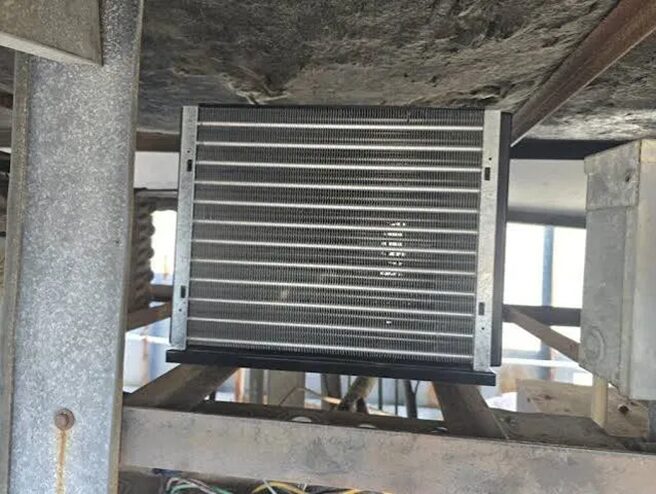
Evaporator coil with visible frost lines — a classic sign the cooler needs professional service.
A clean evaporator coil should look like the one above — clear fins with steady, even airflow. Frost or ice building up on the coil usually means airflow is restrict, the defrost cycle isn’t working, or refrigerant charge is low. Ice buildup reduces cooling capacity and can eventually block airflow completely, which is why it’s one of the clearest signs that a unit needs walk-in cooler repair rather than a simple defrost.
Some business owners try to solve frost buildup by manually chipping ice off the coil, but this rarely addresses the underlying cause and can even damage the delicate fins, making the problem worse. A technician will check door seals, defrost timers, heater elements, and refrigerant levels together, since ice buildup is often a symptom of more than one issue happening at the same time.
3. Unusual Noises or an Overheating Compressor
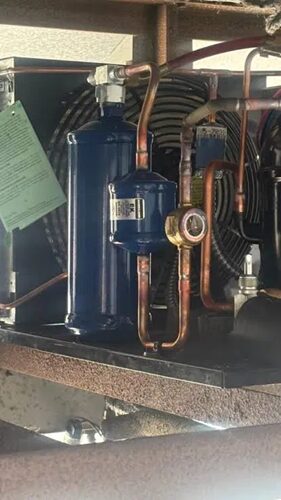
Compressor, filter drier, and refrigerant lines — components that show early signs of strain before a full breakdown.
Buzzing, clicking, grinding, or a compressor housing that feels unusually hot to the touch are all signs of electrical or mechanical strain. Compressors are the heart of the refrigeration cycle, and ignoring these symptoms is one of the fastest ways to turn a routine service call into a full system replacement. If you notice new noises or heat coming from the compressor area, it’s time to schedule professional commercial refrigeration repair before the unit fails completely.
Compressors are design to run within a specific temperature and pressure range. When they overheat repeatedly, internal windings can break down, oil can break down, and the compressor can trip its overload protection or fail outright, usually at the worst possible moment. A technician can measure amperage draw, check start and run capacitors, and inspect the contactor to determine whether the compressor itself is failing or whether an upstream electrical issue is the real cause.
4. The Thermostat Display Doesn’t Match Actual Temperature
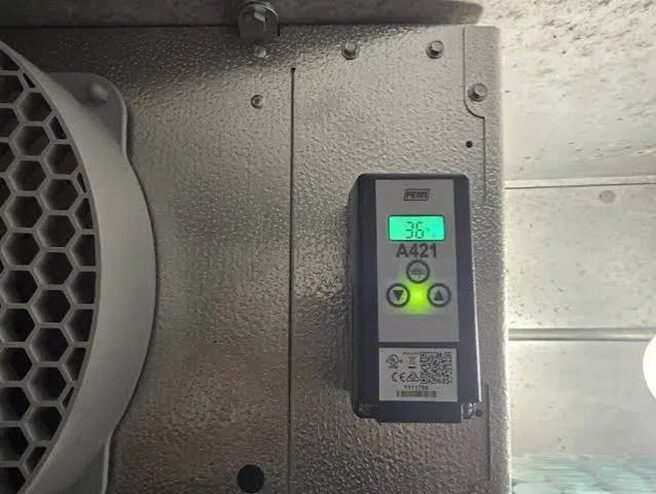
Digital controller reading 36°F — accurate thermostat readings are essential for food safety compliance.
A digital controller like the one shown above should match the actual air temperature inside the box within a degree or two. When the display and the real temperature drift apart, sensors can be miscalibrat, wiring can be damage, or the control board itself may be failing. This is a food-safety issue as much as a comfort issue — inaccurate readings can let product sit in the temperature danger zone without anyone noticing. This is exactly the kind of problem our technicians catch during routine walk-in cooler repair visits.
It’s a good habit to keep an independent thermometer inside the cooler and compare it against the controller display on a weekly basis. If the two consistently disagree, don’t assume the food is still safe just because the digital readout looks fine — schedule a technician to verify and recalibrate the sensor before it becomes a health code violation waiting to happen.
5. Dirty or Clogged Condenser Coils
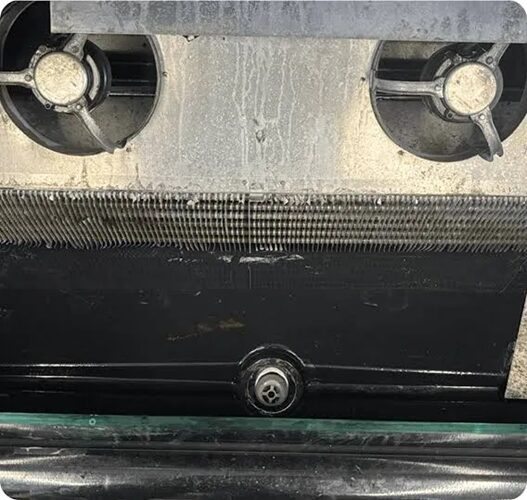
Condenser coil buildup restricts airflow and forces the compressor to work harder.
The condenser coil is where heat is release outside the box. When it’s coat in dust, grease, or debris — common in kitchen environments — the system can’t reject heat efficiently, so it runs longer, works harder, and cools less effectively. Coil cleaning is one of the simplest fixes but also one of the most overlooked. It’s a core part of our
walk-in cooler preventive maintenance program, which is design to catch these issues before they turn into an emergency walk-in cooler repair call.
Kitchens naturally generate airborne grease, flour dust, and steam, all of which settle on condenser coils over time. Depending on how busy the kitchen is, coils may need cleaning as often as every 60 to 90 days. A five-minute coil cleaning during a scheduled visit is far cheaper than the electricity wasted by a struggling compressor, and it significantly extends the life of the entire refrigeration system.
6. The Unit Short-Cycles or Runs Constantly
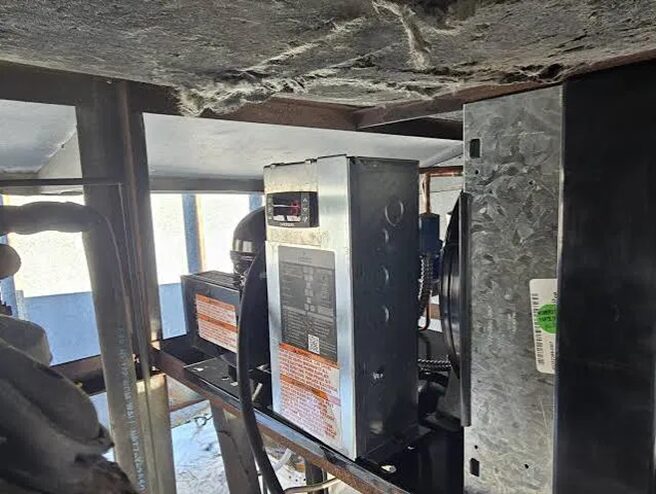
Control panel and electrical components inside the walk-in cooler’s condensing unit housing.
A healthy walk-in cooler cycles on and off in a predictable rhythm. If yours is turning on and off every few minutes (short-cycling) or never seems to shut off at all, something in the control system, thermostat, or refrigerant charge isn’t right. Short-cycling in particular puts heavy wear on the compressor’s start components and can shorten the life of the entire unit if it isn’t address with professional walk-in cooler repair.
Short-cycling also tends to spike energy bills, since every start-up draws significantly more current than steady running. If you’ve noticed your utility costs creeping up without an obvious explanation, an inefficient or short-cycling walk-in cooler is one of the first places worth checking.
7. Water Leaking, Puddles, or Excess Condensation Inside the Box
Standing water on the floor of your walk-in cooler is more than a slip hazard — it usually means the drain line is clog, the drain pan is overflowing, or ice from a failing defrost cycle is melting faster than it can drain. Left unresolve, this can damage flooring, promote mold growth, and signal a deeper cooling problem that needs to be diagnose by a professional.
Excess condensation can also point to a door gasket that’s no longer sealing properly, letting warm, humid kitchen air into the box every time the door swings shut. Worn gaskets are inexpensive to replace but easy to overlook, and they’re one of the first things a technician checks during any walk-in cooler repair visit because a bad seal undermines every other repair made to the system.
DIY Troubleshooting vs. Calling a Professional
It’s reasonable to check a few basics yourself before calling for service: make sure the unit has power, confirm the thermostat setting hasn’t been bump, and clear any boxes blocking the evaporator fan. Beyond that, walk-in refrigeration involves pressurized refrigerant, high-voltage electrical components, and control boards that are easy to damage without the right tools and training. Attempting deeper repairs without experience can void manufacturer warranties, create safety hazards, and often turns a moderate repair into a much larger bill. When in doubt, it’s safer and usually cheaper in the long run to bring in a licensed technician for proper walk-in cooler repair.
Why Savannah Businesses Choose Operation Comfort Control, LLC
When your walk-in cooler goes down, you need a team that shows up fast and fixes the problem right the first time. Operation Comfort Control, LLC has built its reputation on dependable, honest walk-in cooler repair for restaurants, grocery stores, convenience stores, and food service businesses throughout the region. Our technicians are equip to handle everything from refrigerant leaks and compressor failures to control board replacements and complete
walk-in cooler installation for businesses upgrading their equipment.
| Don’t wait for a full breakdown. Schedule walk-in cooler repair with Operation Comfort Control, LLC today. See our Google reviews and get directions |
Prevent the Next Breakdown with Routine Maintenance
The best walk-in cooler repair is the one you never have to call for. Regular coil cleaning, gasket inspection, refrigerant checks, and controller calibration catch small issues before they become expensive ones. Alongside our refrigeration services, we also support the rest of your kitchen equipment through
our broader preventive maintenance programs for cooking equipment and beverage systems, plus general commercial equipment repair and commercial freezer repair — so every piece of equipment in your kitchen stays reliable.
Serving Savannah and the Surrounding Region
Operation Comfort Control, LLC proudly provides walk-in cooler repair, installation, and maintenance to Savannah and the surrounding communities. If your business is located outside Savannah, we likely still cover your area — check our full service area to confirm coverage, or reach out directly and we’ll let you know.
Frequently Asked Questions
How much does walk-in cooler repair cost in Savannah?
Cost depends on the issue — coil cleaning and drain clearing are inexpensive, while compressor or refrigerant repairs cost more. Operation Comfort Control, LLC provides an upfront diagnosis before any work begins.
How often should a walk-in cooler be service?
Most commercial walk-in coolers should be professionally inspect every 3 to 6 months, with coil cleaning and gasket checks as part of routine preventive maintenance.
Can a walk-in cooler be repaired, or does it need replacing?
Most cooling problems — including compressor strain, frost buildup, and control issues — can be repair. Replacement is usually only necessary when the unit is very old or the cost of repeated repairs outweighs a new installation.
Schedule Your Walk-In Cooler Repair Today
Don’t let a small warning sign turn into spoiled inventory and lost revenue. If you noticed any of the 7 signs above, contact Operation Comfort Control, LLC for fast, professional walk-in cooler repair in Savannah.
| Operation Comfort Control, LLC — Savannah’s Commercial Refrigeration Experts Find us on Google and read our reviews |
