
In a busy restaurant, cafeteria, or convenience store, your equipment never gets a day off. Fryers, ovens, griddles, coolers, and ice machines run from open to close, and small problems quietly grow into expensive breakdowns. Knowing the warning signs that your commercial kitchen equipment needs professional repair can save you thousands in lost sales, spoiled food, and emergency service fees.
This guide from Operation Comfort Control, LLC covers the 10 most common signs that it is time to call a technician, what each one means, and what you can do in the meantime. Whether you run a single food truck or a multi-location chain, timely commercial kitchen equipment repair keeps your kitchen safe, efficient, and profitable.
When Does Commercial Kitchen Equipment Need Repair?
Commercial kitchen equipment needs professional repair when it makes unusual noises, heats or cools unevenly, takes longer to reach temperature, uses more energy, leaks, trips breakers, gives off gas or burning smells, shows error codes, breaks down repeatedly, or has visible damage like rust, worn seals, or cracked parts. Any one of these signs deserves a prompt inspection.
Why Early Repair Matters in a Commercial Kitchen
Waiting until equipment fails completely is the most expensive way to handle repairs. A worn fan belt costs little to replace, but ignoring it can burn out a motor. A small gas leak can become a safety emergency. A warm cooler can force you to throw out an entire delivery.
Early commercial kitchen equipment repair also protects you from health code violations, fire hazards, and downtime during your busiest services. The sooner a trained technician diagnoses the issue, the lower your repair bill and the longer your equipment lasts.
10 Signs Your Commercial Kitchen Equipment Needs Professional Repair
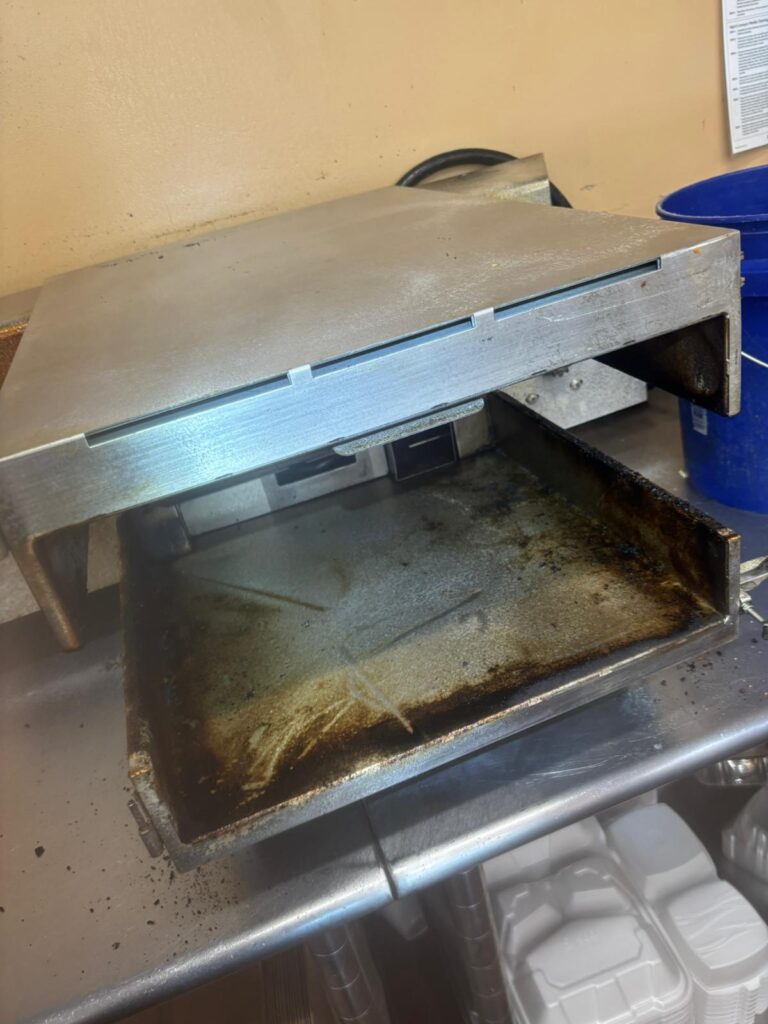
1. Strange or Loud Noises
Grinding, squealing, rattling, banging, or constant buzzing is rarely normal. These sounds often point to worn bearings, failing fan motors, loose components, or a struggling compressor. In refrigeration, a clicking sound followed by silence may mean a failed start relay. What to do: Turn the unit off if the noise is severe and schedule service before the part fails completely.
2. Uneven Heating or Cooling
If your oven has hot and cold spots, your griddle cooks unevenly, or your reach-in has warm shelves, something is wrong. Likely causes include failed thermostats, bad heating elements, faulty gas valves, blocked airflow, or dirty coils. Uneven temperatures cause inconsistent food quality and, in refrigeration, create food safety risks.
3. Temperatures Are Off or Hard to Maintain
When a fryer cannot hold 350°F or a cooler drifts above 41°F, calibration and component failures are the usual culprits. Do not rely only on built-in displays. Check with a separate thermometer and write down the readings for your technician.
4. Longer Cook Times and Slow Recovery
If your fryer takes much longer to recover between baskets, or your oven takes forever to preheat, the equipment is working harder than it should. Failing elements, weak ignition systems, and scale or carbon buildup reduce efficiency and slow your line.
5. Rising Energy and Utility Bills
A sudden jump in gas or electric bills with no change in volume is a red flag. Dirty condenser coils, worn gaskets, failing motors, and poor burner performance all force equipment to use more energy. Fixing the problem often pays for itself within a few months.
6. Gas Smells or Ignition Problems
If you smell gas, leave the area, shut off the gas supply if it is safe to do so, and call your gas utility and a qualified technician immediately. Hard-to-light pilots, yellow or orange flames, and burners that cycle off are also signs that your gas equipment needs urgent attention. Never ignore these issues.
7. Leaks and Water Pooling
Water under a cooler, ice machine, or dishwasher signals a clogged drain, cracked line, failed valve, or worn seal. Besides damaging floors and creating slip hazards, moisture can cause electrical failures and mold. In refrigeration, leaks can also indicate a frozen evaporator or defrost problems.
8. Tripped Breakers, Sparks, or Electrical Issues
If a breaker trips every time a unit starts, lights flicker, cords feel hot, or you see sparks, shut the equipment down. Causes include failed motors, shorted heating elements, worn wiring, and damaged controls. Electrical faults are a fire risk and should only be handled by a qualified technician.
9. Burning Smells, Smoke, or Odd Odors
A faint burning smell can mean dust on a new element, but a persistent odor points to overheating motors, frayed wiring, or grease buildup near heat sources. Musty smells from coolers and ice machines usually mean drain issues or mold. Do not run equipment that smokes.
10. Frequent Breakdowns, Error Codes, and Visible Wear
If you are calling for service repeatedly on the same machine, or the display keeps showing error codes, the root problem has not been solved. Rust, cracked door seals, loose hinges, damaged cords, and corroded burners are also signs of wear that should be corrected before they cause a shutdown.
| Seeing One of These Signs in Your Kitchen? Do not wait for a breakdown during the dinner rush. Reach out through the Operation Comfort Control contact page and let our technicians inspect your equipment before a small issue becomes a big one. |
Quick Reference: Warning Sign, Likely Cause, and Urgency
| Warning Sign | Likely Cause | Urgency |
| Grinding or squealing | Bad bearings or motor | Within 48 hours |
| Uneven cooking or cooling | Thermostat, element, or airflow | This week |
| Higher energy bills | Dirty coils, worn seals, burners | This month |
| Smell of gas | Gas leak or valve failure | Emergency |
| Water leaks | Clogged drain or cracked line | Within 48 hours |
| Breaker trips or sparks | Electrical fault | Immediately |
| Smoke or burning odor | Overheated motor or wiring | Immediately |
| Repeated breakdowns | Underlying component failure | This week |
Equipment That Needs Repair Most Often
Every piece of equipment in your kitchen can fail, but a few categories account for most service calls. Our commercial equipment repair service covers all of them:
- Refrigeration: walk-in coolers, reach-ins, prep tables, and freezers fail from dirty coils, bad fans, and gasket wear. Our commercial refrigeration repair team handles diagnostics and urgent cooling failures.
- Cooking equipment: fryers, ovens, ranges, and griddles suffer from burner, thermostat, and ignition problems.
- Ice machines: scale, dirty condensers, and water flow issues reduce ice production and can create sanitation problems.
- Beverage and coffee equipment: pumps, boilers, and heating elements wear out with daily use.
- Warewashing and ventilation: dishwashers and hood fans often show leaks, weak performance, or electrical faults.
The Real Cost of Ignoring Warning Signs
Delaying commercial kitchen equipment repair rarely saves money. A single day of downtime can mean lost lunch and dinner sales, wasted labor, and unhappy customers who may not come back. Spoiled inventory from a failed cooler can cost more than the repair itself, and a failed health inspection can damage your reputation for months.
Emergency calls also cost more than planned service. When a part fails during a rush, you pay for urgency, and you may wait for parts that could have been ordered in advance. Catching the problem early lets your technician schedule the visit around your hours, order the right part, and finish the job without disrupting service.
What You Can Safely Check Before Calling
A few quick checks may help you describe the issue accurately, or even solve it:
- Confirm the unit is plugged in and the breaker has not tripped.
- Check that thermostat settings have not been changed.
- Clean visible dust, grease, and debris from vents and coils (power off first).
- Make sure nothing is blocking airflow or door seals.
- Note any error codes, sounds, smells, and when the problem started.
Never attempt gas line, electrical, or refrigerant repairs yourself. These require licensed professionals, and mistakes can create serious safety hazards or void warranties.
Preventive Maintenance: The Best Way to Avoid Emergency Repairs
The most reliable way to reduce commercial kitchen equipment repair costs is to stop problems before they begin. A regular maintenance plan includes cleaning, calibration, lubrication, safety checks, and replacement of worn parts. Our commercial cooking equipment preventive maintenance program helps keep ovens, fryers, griddles, and ranges running safely and efficiently.
Do not forget your ice machine. A dirty machine produces less ice and can contaminate it. Scheduled ice machine preventive maintenance keeps production steady and helps you meet health department expectations.
| Get Your Kitchen on a Maintenance Plan Prevent breakdowns before they happen. Contact Operation Comfort Control, LLC to schedule an inspection and keep your equipment running through every rush. |
Repair or Replace? How to Decide
Use this simple guide. Repair when the equipment is under 10 years old, the issue is a single component, and the repair costs less than half of a new unit. Replace when the equipment is old, repairs are frequent, parts are hard to find, or efficiency has dropped significantly.
If replacement makes sense, check our options for a fryer for sale near me to get a reliable, properly sized unit installed and ready for your menu.
Why Choose Operation Comfort Control, LLC for Commercial Kitchen Equipment Repair
Operation Comfort Control, LLC supports restaurants, schools, gas stations, healthcare facilities, and retail food operations with fast, professional service. We know that every hour of downtime costs you money, so our approach is simple: accurate diagnosis, honest recommendations, and repairs done right the first time.
We serve southeast Georgia and the South Carolina Lowcountry, including Statesboro, Pooler, Brunswick, Hinesville, Vidalia, Bluffton, and Hilton Head. Check the full list on our areas we serve page, or browse all of our commercial equipment services.
What you can expect when you work with us:
- Experienced technicians trained on commercial refrigeration and cooking equipment
- Prompt response for urgent breakdowns
- Clear communication and upfront recommendations
- Repair, preventive maintenance, and equipment sales in one place
- Local, reliable support you can count on
Frequently Asked Questions
Q: How do I know if my commercial kitchen equipment needs repair?
Watch for unusual noises, uneven temperatures, longer cook times, higher energy bills, leaks, tripped breakers, odd smells, error codes, and repeated breakdowns. If you notice any of these, schedule an inspection right away.
Q: How much does commercial kitchen equipment repair cost?
Cost depends on the equipment type, the failed part, and labor. Minor repairs like gaskets, igniters, or thermostats are usually affordable, while compressors and major components cost more. A diagnostic visit gives you a clear quote before work begins.
Q: Should I repair or replace old kitchen equipment?
If the unit is more than 10 to 12 years old and repair costs exceed about half the price of a new one, replacement usually makes more sense. Frequent breakdowns and high energy use are also strong signs to replace.
Q: How often should commercial kitchen equipment be serviced?
Most equipment benefits from professional maintenance at least twice a year. High-volume kitchens with heavy grease and constant use should consider quarterly service.
Q: What should I do if I smell gas in my kitchen?
Stop using the equipment, shut off the gas supply if safe, evacuate the area, and call your gas utility and a qualified technician from outside. Do not turn on switches or flames.
Final Thoughts
Your kitchen cannot afford surprises. The 10 signs above are your early warning system, and acting on them quickly protects your food, your staff, and your bottom line. When your commercial kitchen equipment needs professional repair, the best move is to call a trusted local expert before a small issue becomes a shutdown.
| Need Commercial Kitchen Equipment Repair? (912) 253-4290. Trust Operation Comfort Control, LLC for dependable diagnosis, repair, and maintenance. Visit our Google Business Profile, read our reviews, and get your kitchen back to full speed today. |
