
You open the walk-in first thing in the morning and the back wall looks like a glacier. Frost is wrapped around the evaporator coil, ice is spreading across the floor, and the fan is barely turning. A walk-in freezer icing up is one of the most common and most expensive problems in commercial refrigeration.
Ice blocks airflow, forces the compressor to run longer, raises your energy bill, and lets the box temperature drift toward unsafe levels for your inventory. The good news is that the causes are limited, and many are easy to catch early.
In this guide, Operation Comfort Control, LLC explains why ice builds up inside walk-in freezers, which quick fixes are safe, what to avoid, and when to call a pro. We serve restaurants, convenience stores, and hotels across coastal Georgia and the Lowcountry, and we see this problem every week. We also handle commercial equipment repair for the rest of your kitchen.
What Does It Mean When a Walk-In Freezer Is Icing Up?
A thin, even layer of frost on the evaporator coil is normal. A walk-in freezer icing up beyond that point, with thick ice on the coil, frozen fan blades, ice on the door frame, or water freezing on the floor, means moisture is entering faster than the defrost system can remove it, or the defrost system has stopped working.
Your freezer pulls heat and moisture out of the air. That moisture freezes onto the coldest surface, the evaporator coil. Several times a day, a defrost cycle warms the coil to melt the frost, and the water drains away. When that cycle fails, frost stacks up until airflow stops. Where the ice appears tells you a lot:
| Where the ice appears | What it usually means |
| Evaporator coil and fan blades | Failed defrost heater, sensor, or timer; weak fan motor |
| Door frame, gasket, threshold | Warm humid air leaking in; worn gasket; failed door heater |
| Floor near the door | Door left ajar, or water refreezing after a drain problem |
| Drain pan and drain line | Clogged or frozen drain line; failed drain heater |
| Walls or ceiling | Air leaking through damaged panels or gaps |
8 Common Causes of a Walk-In Freezer Icing Up
1. Door Left Ajar or Not Sealing
Every second the door is open, warm humid air rushes in and freezes on the first cold surface it touches. A door that will not close and latch on its own, a failed closer, or misaligned hinges can leak air all day. Ice around the frame and threshold is the giveaway.
2. Worn or Damaged Door Gaskets
Torn, hardened, or flattened gaskets let moist air leak in even when the door looks closed. Gaskets are cheap compared with the ice and wasted energy they cause, so inspect them often.
3. A Failed Defrost System
This is the top cause of heavy ice on the coil. Defrost depends on a heater or hot-gas circuit, a termination sensor, and a timer or control board. If one fails, the coil never fully clears and frost compounds with every cycle. If ice concentrates on the coil and returns quickly after clearing, suspect defrost first.
4. Evaporator Fan Motor Problems
Weak or failed fan motors reduce the airflow that moves moisture through defrost. Slow or ice-covered blades are a red flag, and fan failure often triggers a fully frozen coil.
5. Blocked or Frozen Drain Line
Meltwater must leave the box through the drain line, which is heated in a freezer. If the heater fails or the line clogs, water backs up and freezes into a sheet of ice under the coil or on the floor.
6. Overstocking and Blocked Airflow
Boxes stacked against the evaporator or shelves packed tight to the walls stop air from circulating. Moisture condenses where air stalls, and the coil cannot do its job.
7. Warm Product and Frequent Door Openings
Loading warm product or propping the door open during deliveries adds a burst of heat and moisture. Stage deliveries and use strip curtains to limit air exchange.
8. Refrigerant or Condenser Problems
Low refrigerant, a failing expansion valve, or a dirty condenser can make the coil frost unevenly. These need a certified technician, and ignoring them shortens compressor life.
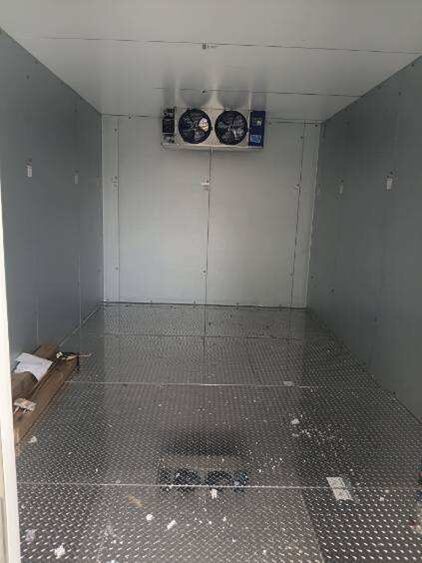
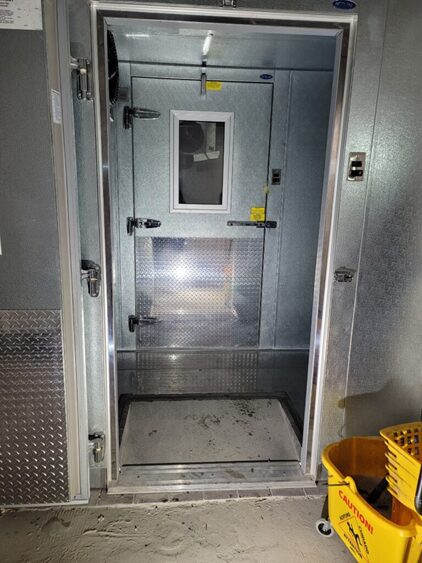
Why Savannah’s Humidity Makes a Walk-In Freezer Icing Up More Likely
Coastal Georgia and the Lowcountry stay warm and humid for much of the year. Humid air carries more water vapor, so every door opening delivers more moisture into your walk-in, and that moisture becomes frost and ice. Freezers in Savannah, Pooler, Richmond Hill, and Beaufort face this daily.
Hurricane season adds risk. After a power outage, keep the door closed, monitor temperature, and have the system inspected before restocking.
Quick Fixes for a Walk-In Freezer Icing Up (Safe Steps)
These checks help you find the cause and limit damage. If you are uncomfortable working near electrical parts or fan blades, stop and call a technician.
- Check the temperature. A walk-in freezer should hold 0°F or lower. If it is rising, move at-risk product to another freezer.
- Watch the door. It should close, latch, and seal on its own, with nothing wedging it open.
- Inspect the gasket. Look for tears, gaps, or hard rubber. Close the door on a strip of paper; if it slides out easily, the seal is weak.
- Clear airflow. Keep product and boxes away from the evaporator fans and walls.
- Cut door-open time. Stage deliveries, add strip curtains, and train staff to close the door fully.
- Remove floor ice. Clear ice near the door and mop standing water to prevent slips.
- Do a controlled defrost. For a heavily iced coil, move product out, turn refrigeration off at the controller, prop the door open, and let the ice melt on its own. Keep water away from electrical parts.
These steps treat the symptom. If a failed heater, sensor, or clogged drain is the cause, the ice will return.
| What NOT to Do Do not chip or scrape ice off the coil with a screwdriver, knife, or ice pick.Do not use a heat gun, torch, or open flame near the coil or panels.Do not keep resetting or power-cycling the compressor.Do not ignore repeated icing. Ice that keeps returning signals a real fault. |
Signs It Is Time to Call a Technician
Some icing problems are fixed with better habits. Others need a licensed refrigeration technician. Call for help if you notice:
- Ice returns within days of clearing it.
- The coil or fan blades are fully encased in ice.
- The box cannot hold 0°F with the door closed.
- Water is pooling or freezing near the drain.
- The compressor runs constantly or cycles rapidly.
- Oily residue appears on lines or fittings, a possible refrigerant leak.
Waiting turns a small repair into a big one. A failed defrost heater is a modest fix; a burned-out compressor is not. Our commercial freezer repair team can diagnose the problem fast and get your box back to temperature.
| Walk-In Freezer Icing Up Right Now? Call Operation Comfort Control, LLC at (912) 253-4290. We are open 24/7, with same-day service available across Savannah and nearby areas. |
What Happens During Professional Commercial Refrigeration Repair
A good technician does not just chip away the ice; they find out why it formed. On a commercial refrigeration repair visit, we typically:
- Check box temperature and ask when the icing started and how often it returns.
- Inspect the door, hinges, closer, gaskets, and door heaters.
- Test the defrost heater, termination sensor, and timer or control board.
- Test evaporator fan motors, then check the drain line and drain heater.
- Verify refrigerant pressures and condenser condition.
- Run a controlled defrost and confirm the box returns to temperature.
We explain what we found in plain language and take before-and-after photos. All OEM part warranties range from 90 to 180 days, so you know we stand behind the parts and service.
Repair or Replace? When a New Walk-In Makes Sense
Repairs solve most icing problems. But if a walk-in freezer icing up keeps returning after repairs, the box itself may be the problem: damaged panels, a warped door, a failing floor, or refrigeration that is undersized for the load. In those cases, a professional walk-in cooler installation gives you a properly sealed, correctly sized system that holds temperature.
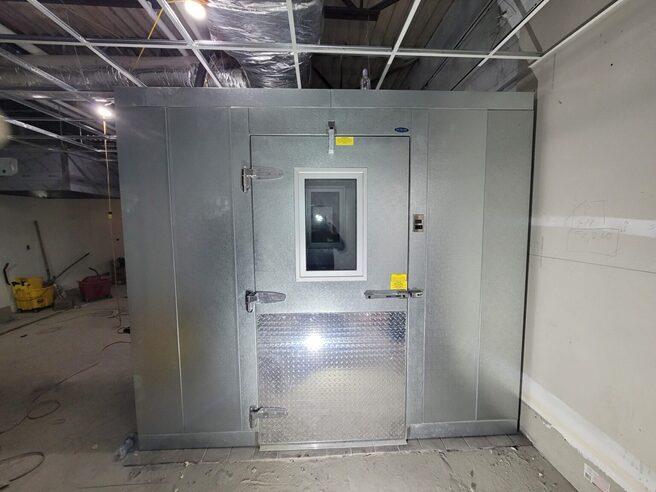
A completed walk-in installation, sealed and ready for service.
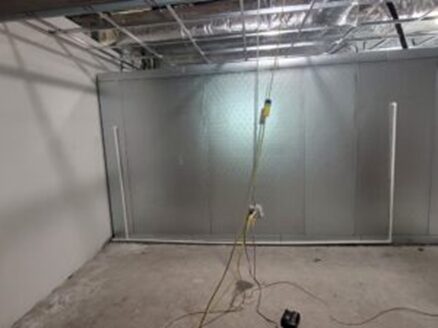
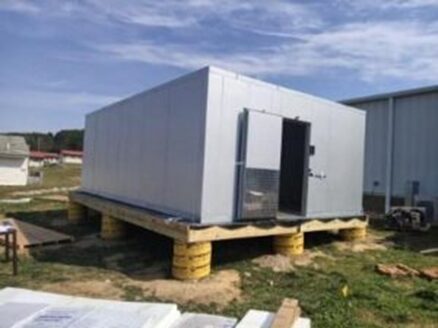
Good installation includes tight panel seams, proper drainage, right-sized refrigeration, and placement that limits humid-air exposure.
How to Prevent a Walk-In Freezer Icing Up
Prevention is cheaper than an emergency call. A simple routine keeps small issues from becoming a frozen coil.
| Task | How often | Who |
| Log freezer temperature and confirm the door latches | Daily | Staff |
| Keep product clear of evaporator fans | Weekly | Staff |
| Inspect gaskets, hinges, and closer | Monthly | Staff or technician |
| Clean condenser coil | Quarterly | Technician |
| Test defrost cycle, heaters, sensors, and fans | Quarterly | Technician |
| Check drain line and drain heater | Quarterly | Technician |
A scheduled walk-in cooler and freezer preventive maintenance plan catches worn parts before they fail, which usually costs far less than emergency repairs and lost inventory.
| Stop the Ice Before It Starts Book preventive maintenance with Operation Comfort Control, LLC. Call (912) 253-4290 to set up a plan for your walk-in cooler, freezer, ice machines, and cooking equipment. |
Serving Savannah, Coastal Georgia, and the Lowcountry
Operation Comfort Control, LLC is based at 100 Bull St., Savannah, GA 31401. We serve Savannah, Pooler, Richmond Hill, Hinesville, Statesboro, Brunswick, Metter, Vidalia, Jesup, Beaufort, Bluffton, and Hilton Head. See the full area we serve, or browse our project gallery for real installs and results.
FAQs About a Walk-In Freezer Icing Up
Why is my walk-in freezer icing up?
The most common causes are a door or gasket leak, a failed defrost heater, sensor, or timer, a bad evaporator fan, or a clogged drain line. High humidity and blocked airflow make it worse.
Is some frost on the evaporator coil normal?
Yes. A light, even frost is normal. Thick ice, frozen fan blades, or ice that returns within days is not.
Can I chip the ice off the coil?
No. Sharp tools can puncture the coil and cause a refrigerant leak. Use a controlled defrost or call a technician.
How often should a walk-in freezer defrost?
It depends on the system and manufacturer settings, but most run several scheduled defrost cycles per day. If ice builds up anyway, the defrost system needs testing.
How much does commercial freezer repair cost?
It depends on the cause. A gasket, defrost heater, fan motor, and refrigerant repair are very different jobs, so a proper diagnosis comes first.
Do you offer emergency service in Savannah?
Yes. Operation Comfort Control, LLC is open 24/7 at (912) 253-4290, with same-day service available.
Do Not Let a Walk-In Freezer Icing Up Cost You Inventory
Ice is a warning sign. Catch it early, fix the real cause, and maintain the system, and you protect your food, your energy bill, and your equipment. If your walk-in freezer is icing up and you are not sure why, a quick diagnosis is worth far more than another round of chipping ice.
| Talk to a Refrigeration Technician Today Operation Comfort Control, LLC | 100 Bull St., Savannah, GA 31401 Call (912) 253-4290 | Open 24/7 | Request service online |
